

If there’s one era that truly understood the power of effortless, flowing hair, it’s the 1970s. I remember sitting in my mother’s vanity chair as a little girl in Savannah, watching her layer on her makeup before a night out — and her hair, oh, her hair was always this gorgeous, voluminous, feathered masterpiece that framed her face like she was perpetually walking in slow motion through a breezy field. That image never left me. It’s part of why I fell so deeply in love with beauty in all its forms, including hair.
Feathered hair from the 70s is one of those timeless styles that keeps finding its way back into our lives, and honestly? I’m here for every single second of it. Whether you’re a longtime lover of vintage beauty or someone just discovering the magic of this decade, feathered hair offers something genuinely special — movement, volume, softness, and a certain effortless cool that modern trends simply can’t replicate. As someone who works with hair and makeup day in and day out on sets and in studios across Los Angeles, I’ve seen this era’s aesthetic return with serious force. My clients are asking for it, editorials are featuring it, and I couldn’t be more excited to break it all down for you.
So let’s dive deep into 13 of the most iconic and unique feathered hair styles from the 70s that deserve a spot in your beauty rotation right now.
The Classic Farrah Flip
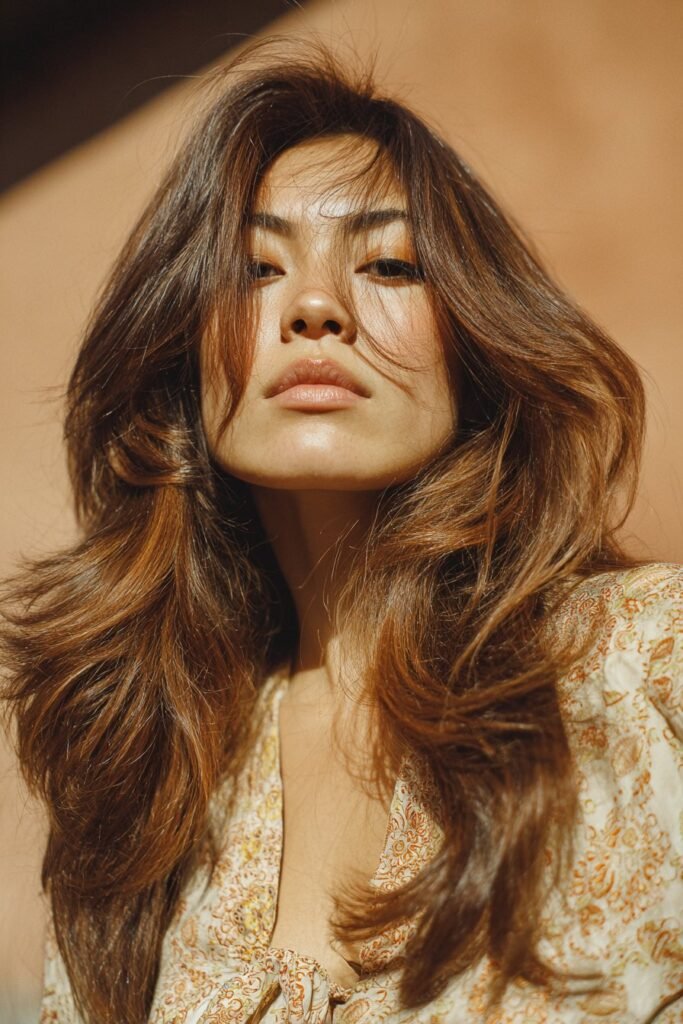
What it is and why it became a legend
The classic Farrah Flip is arguably the most recognizable feathered hairstyle to ever exist. When we talk about 70s hair, this is the image that comes to most people’s minds — those big, bouncy, swept-back wings that frame the face like parentheses of pure glamour. It’s characterized by voluminous layers that are curled away from the face and then feathered back using a round brush or hot rollers. The layers create movement and dimension, while the signature “flip” refers to how the ends curl outward and upward, almost like wings taking flight. The style became a cultural phenomenon largely because of a swimsuit poster featuring a big-haired actress that became one of the best-selling posters in history. It represented something beyond fashion — it was freedom, confidence, and a certain rebellious femininity that spoke to an entire generation.
Best for natural wave and medium to thick hair types
This style is genuinely one of the most flattering feathered looks ever created, and it works especially beautifully on people with naturally wavy or slightly thick hair. The natural wave gives the layers something to hold onto, making it easier to achieve that iconic volume without fighting your texture. For those with medium thickness, the layers open up the hair and give it movement without overwhelming your face. If you have fine hair, don’t worry — I’ve worked with plenty of fine-haired clients on this exact style, and with the right volumizing products and technique, you can absolutely pull it off. The key is using a lightweight mousse at the roots before blow-drying, which lifts without weighing the hair down.
How to get the look at home
Start with freshly washed hair and apply a volumizing mousse from root to mid-length, avoiding the ends so they don’t get weighed down. Blow-dry your hair roughly with your fingers first to build initial volume, then section it off into large pieces. Using a medium round brush, take each section and roll it away from your face while directing the dryer’s heat downward. As you pull the brush through the hair, angle it upward at the ends to create that classic outward flip. Finish with a large-barrel curling iron on the outermost layers to enhance the wing shape, then gently separate the curls with your fingers — never a comb, which will kill the volume. Lock everything in place with a flexible hold hairspray and you’re done. I always tell my clients to resist the urge to over-touch the style once it’s set. Let it breathe and it’ll look effortlessly beautiful.
Shag Layers With Feathered Ends
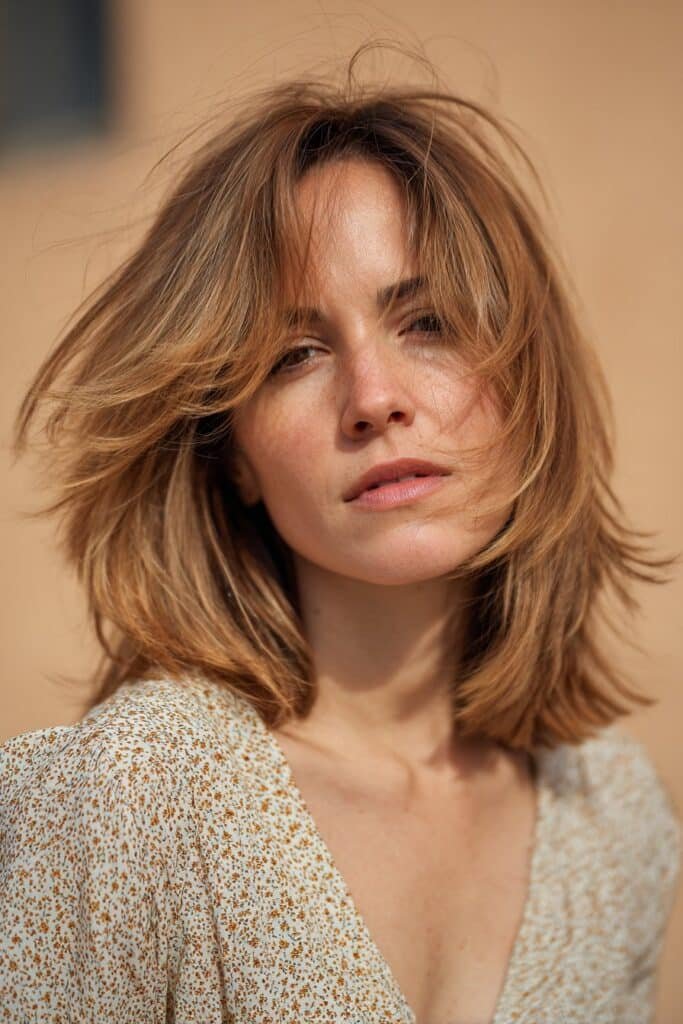
What it is and the rock-and-roll soul behind it
If the Farrah Flip is the sweetheart of 70s feathered hair, the shag with feathered ends is its edgier, cooler sibling. This style features heavily layered cuts throughout the entire head — not just at the face — with choppy, wispy ends that are feathered to create a tousled, almost undone look. The shag was popularized by rock musicians and actresses who wanted to channel a more carefree, bohemian energy. It’s got texture, attitude, and a raw kind of beauty that I absolutely adore. What makes this style unique compared to other feathered looks is that the feathering happens throughout, not just at the top or sides. Every layer has that light, airy, feather-like quality that makes the whole head look effortlessly tousled.
Best for adding texture to straight or fine hair
Here’s why I love recommending the feathered shag to clients with straight or fine hair: the heavy layering creates the illusion of thickness and volume that simply wouldn’t be there otherwise. When straight hair is cut into a shag with feathered ends, the varied lengths play off each other to create movement and dimension. It’s almost like the haircut does all the work for you, which is a gift if you’re someone who doesn’t love spending a lot of time styling. Fine hair particularly benefits from this cut because the removal of weight through layering lets each strand sit higher and move more freely.
How to style feathered shag layers like a pro
The secret to nailing the feathered shag is embracing texture products. I always reach for a texturizing spray or sea salt spray applied to damp hair before diffuse-drying. Scrunch the hair as you dry it rather than smoothing it, which helps each layer settle into its natural position with that feathery, piece-y quality. Once dry, take a small amount of a lightweight hair oil or pomade and work it through the ends with your fingers to define the feathered tips without making them look greasy. If your hair tends to flatten throughout the day, a quick spritz of dry shampoo at the roots can revive the volume in seconds. The less structured this style looks, the better it reads — so give yourself permission to let it be a little messy.
Winged Side-Swept Feathers
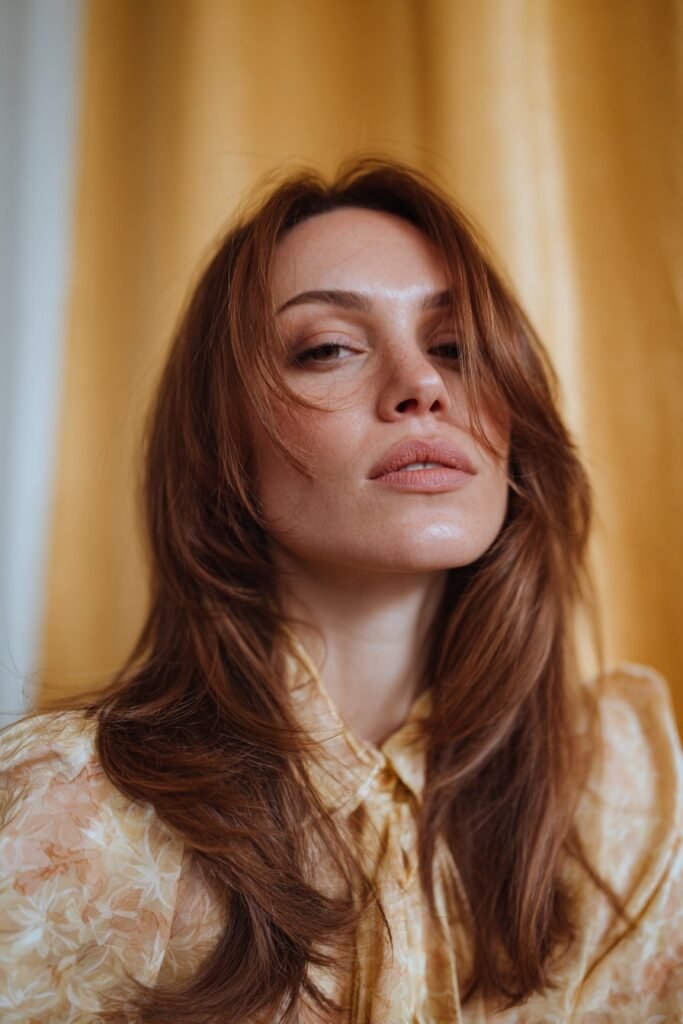
What it is and the art of asymmetry
The winged side-swept feathered style is one of my personal favorites because of how dramatically it changes the silhouette of the face. Unlike the centered symmetry of the classic flip, this look is all about sweeping the hair heavily to one side and creating a dramatic wing or feathered layer that falls across one side of the face while the other side is swept back. It’s asymmetrical, theatrical, and has this gorgeous old Hollywood quality that photographs beautifully. In the 70s, this style was often seen on stage performers and actresses who understood that asymmetry draws the eye and creates a sense of drama and intrigue. I use this style regularly in editorial shoots when we want to add visual tension to a look.
Best for oval and heart-shaped faces
The asymmetrical nature of winged side-swept feathers does incredible things for oval and heart-shaped faces. For heart-shaped faces, the heavy side-sweep adds visual weight to the lower half of the face, balancing the wider forehead. For oval faces, honestly, almost any style works, but the drama of this look is particularly striking because it highlights the natural proportions without needing to compensate for anything. Round face shapes can also benefit if the wing is styled to fall diagonally rather than straight across, which elongates the face.
How to create the perfect side-swept wing
After blow-drying your hair with volume, decide which side you want to sweep toward and use a deep side part. Take the larger section and begin wrapping it with a large-barrel curling iron, curling away from your face. As you work through the layers, feather the ends by gently pulling the curling iron downward while releasing the curl to create that soft, airy quality. Pin the swept section loosely while it cools — this sets the wing shape. On the opposite side, use the round brush to sweep the hair back and away from the face, securing it softly with a few pins or letting it fall naturally depending on the length. Once everything is cooled, release the pins and use your fingers to gently arrange the wing so it falls with natural movement. A light mist of shining spray gives it that glossy, glamorous 70s finish.
Voluminous Feathered Bob
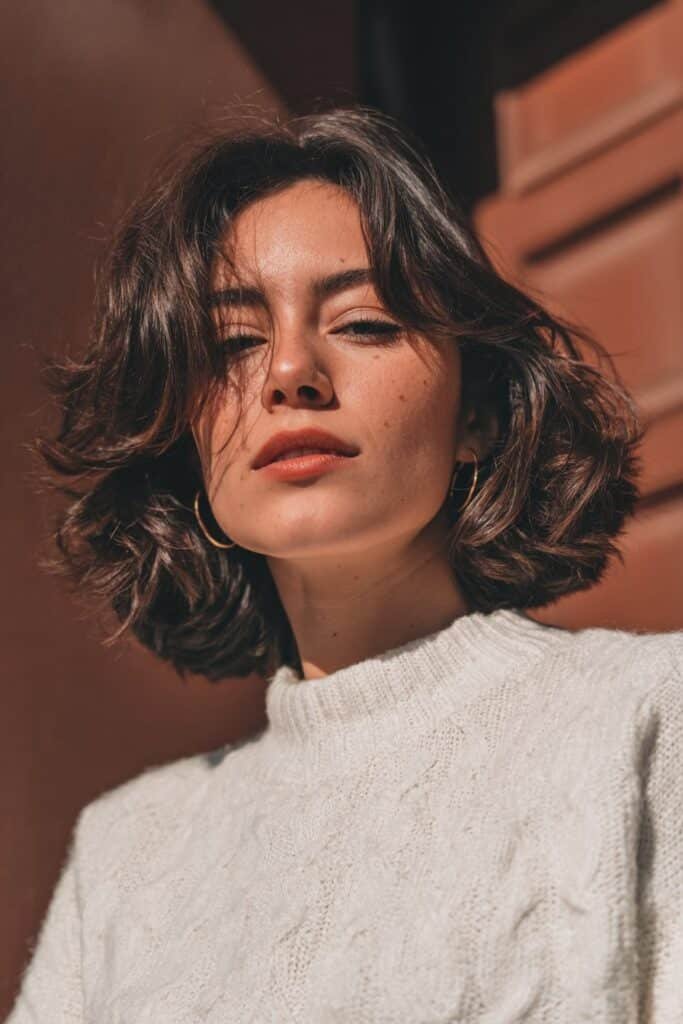
What it is and why the bob got a 70s upgrade
The standard bob got a serious makeover in the 70s when stylists started incorporating feathered layers and wispy ends into what had previously been a more structured, geometric cut. The voluminous feathered bob sits at chin length or just below and features internal layering throughout, with the outer layers feathered to create softness and movement. It’s shorter and more polished than the shag, but still carries that unmistakable 70s energy through its texture and volume. What I love about this particular version of the feathered look is how wearable it is across different settings — it works just as well in a professional environment as it does at a weekend music festival.
Best for shorter neck and rounder jaw profiles
The feathered bob works absolute magic on people who have shorter necks or rounder jaw profiles. The layering and volume at the crown create vertical height, which visually lengthens the neck. Meanwhile, the feathered layers at the sides of the face soften any squareness or roundness in the jawline by creating a graduated, wispy frame rather than a blunt edge. I’ve worked with so many clients who were hesitant about going shorter because they felt it would emphasize the roundness of their face, and every single time, a well-cut feathered bob changed their mind entirely.
How to blow-dry and style a feathered bob
The key to maximizing the feathered bob’s potential is in the blow-dry technique. Start by applying a round-brush volumizing spray to the roots and a smoothing serum to the mid-lengths and ends. Using a medium round brush, begin at the nape of your neck and work in sections upward, directing each section forward and under slightly as you dry, then flipping it back out at the ends to create the feathered finish. The crown section should be dried straight up and then slightly back to build that signature height. Finish with a flat iron on any sections that need extra smoothness, and then use the flat iron itself to bend the very ends outward slightly. A quick blast of cool air from the dryer sets the style and adds shine.
Bohemian Feathered Waves
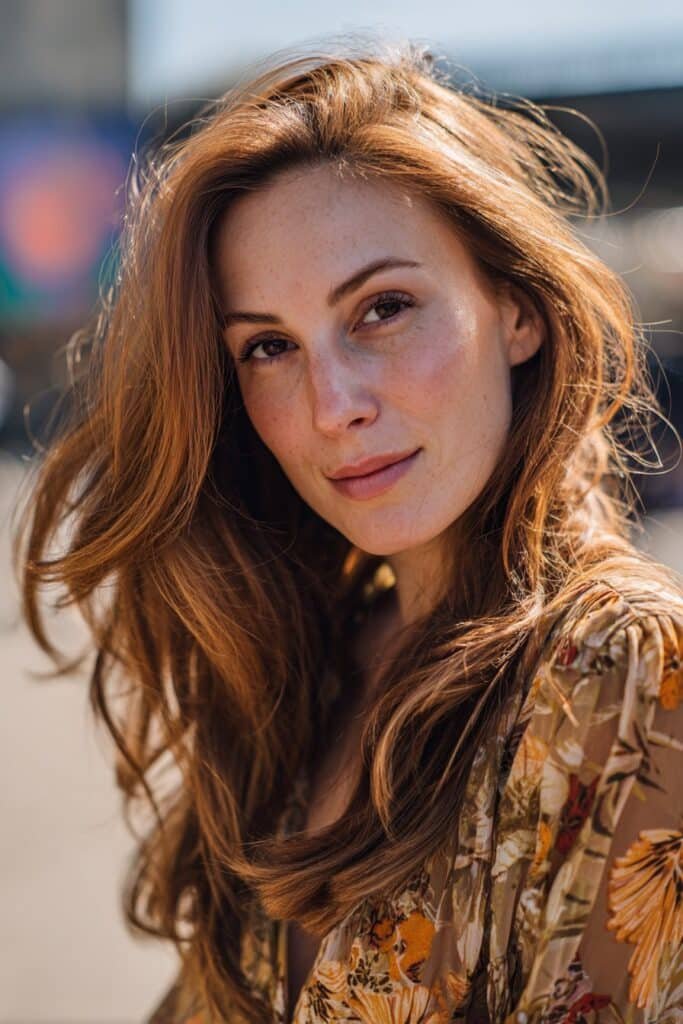
What it is and the free-spirited philosophy behind it
Bohemian feathered waves are what happens when 70s feathered hair meets the relaxed, sun-soaked energy of California beach culture. This style features long layers with feathered ends that flow into soft, loose waves throughout. It’s less structured than the Farrah Flip and less choppy than the shag — it exists somewhere beautifully in between, with a natural, undone quality that looks like you spent the day outdoors and your hair simply fell into place perfectly. This was the style of the wanderers, the dreamers, the women who wore flowy dresses and carried wildflowers and genuinely didn’t care what anyone thought of them. And yet, paradoxically, it’s one of the most beautiful and eye-catching looks you can wear.
Best for naturally wavy and long hair textures
If you have naturally wavy hair that falls past your shoulders, bohemian feathered waves are essentially your hair’s destiny. The natural wave pattern does at least half the work for you — the feathered layers simply enhance what’s already there, giving the waves more definition and the ends more movement. For long hair specifically, the layering prevents the style from looking flat or heavy at the bottom, which is a common challenge with long, one-length cuts. The feathering distributes the volume throughout the length so the style has energy from root to tip.
How to enhance your natural waves with feathered styling
The technique here is all about working with your natural texture rather than against it. After washing, apply a curl-enhancing cream or wave spray to soaking wet hair and then scrunch it upward toward your scalp. Let your hair air dry about 70 percent of the way, then diffuse the remaining moisture using a low heat setting, scrunching as you go. Once completely dry, take a large-barrel curling iron and add a few strategic waves to any sections that dried straighter than you’d like, wrapping the hair loosely and holding for only a few seconds before releasing. Separate and fluff the waves gently with your fingers, then use a tiny amount of hair oil on your palms, pressed lightly over the surface of the style, to tame frizz and add that sun-kissed sheen. Never brush this style — it will destroy the wave pattern.
Feathered Curtain Bangs
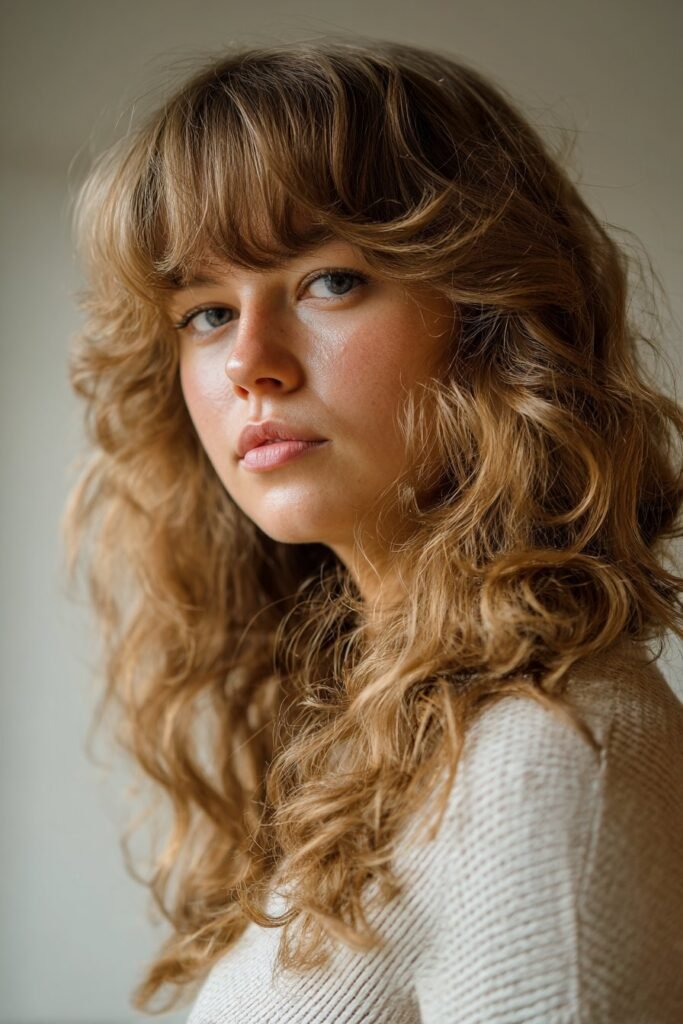
What it is and the soft drama of face-framing fringe
Curtain bangs with feathered edges are one of the most face-transforming elements you can add to any hairstyle, and they were absolutely everywhere in the 70s. These are center-parted bangs that sweep outward to each side, framing the face like — you guessed it — a pair of curtains. What makes them distinctly 70s and distinctly feathered is the wispy, textured quality of the ends, which are thinned and feathered rather than blunt-cut. The result is a soft, romantic fringe that transitions seamlessly into the rest of the hair. I personally have experimented with curtain bangs multiple times in my career, and every single time I add them, my clients tell me they feel like a completely different, more confident version of themselves. There’s something about face-framing bangs that just does something magical for the spirit.
Best for high foreheads and square or angular features
Feathered curtain bangs are particularly effective for people with high foreheads because the bangs visually lower the hairline and create a more proportionate balance between the forehead and the rest of the face. For those with square or angular features, the soft, wispy quality of feathered curtain bangs introduces curves and roundness that soften the overall silhouette. They’re also extremely flattering for people transitioning between hairstyles — curtain bangs grow out gracefully and never reach that awkward, unusable stage that traditional blunt bangs often hit.
How to style feathered curtain bangs perfectly
Styling curtain bangs correctly is something that takes a little practice but becomes second nature quickly. Start with damp bangs and use a small round brush to roll the center of the bang section slightly under, then sweep each side outward and back toward the temple while directing the dryer’s airflow in the same direction. This sets the part and the sweep simultaneously. Once the bangs are about 80 percent dry, use a small curling iron or the tip of a flat iron to softly bend the outer ends of the bangs away from the face, reinforcing the curtain shape. Finish with a tiny amount of texturizing cream worked through the tips of the bangs with your fingertips to create that feathered, wispy quality. If your bangs fall flat throughout the day, a small round brush and a travel-size hair dryer can revive them in about two minutes.
Long Feathered Layers With Center Part
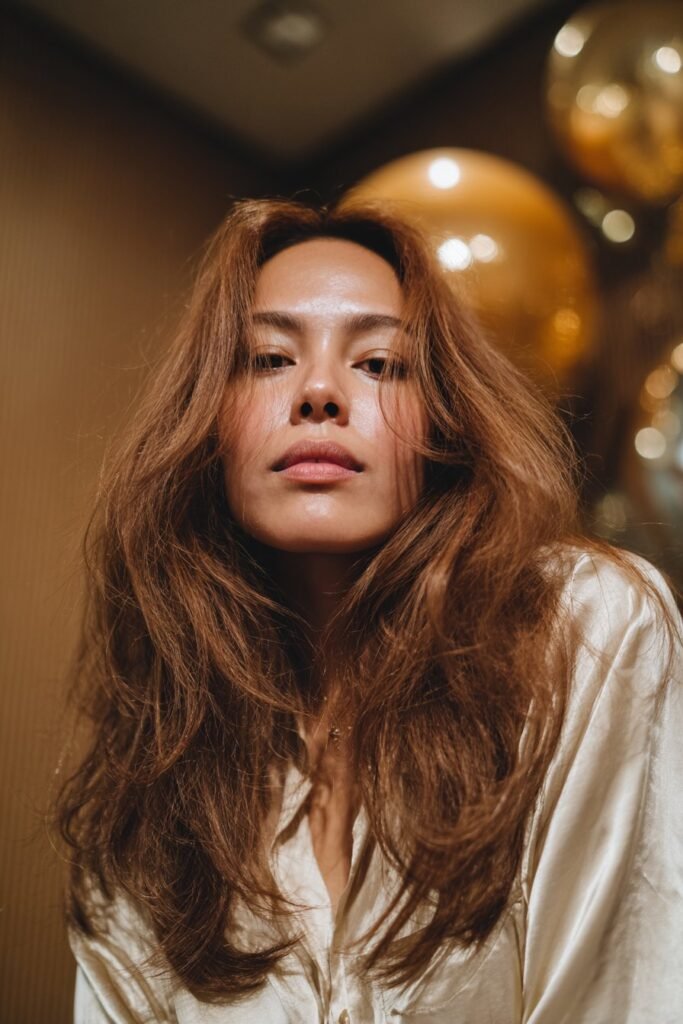
What it is and the iconic simplicity of it
Sometimes the most powerful styles are the simplest ones. Long hair with deep feathered layers and a clean center part is one of those classic 70s looks that has never truly gone out of style and probably never will. The center part creates perfect symmetry, and the feathered layers throughout the length of the hair add the movement and texture that separate this style from a plain, one-length cut. Think of it as the most natural-looking of all the feathered styles — it looks like the kind of beautiful, effortless hair that you were simply born with. In my work, I often reach for this aesthetic when I want a client to look gorgeous without looking overdone.
Best for symmetrical faces and longer hair lengths
A center part requires a certain symmetry to look its absolute best, so this particular feathered style is most naturally suited to symmetrical or close-to-symmetrical faces. That said, the feathered layers on either side of the part can be strategically cut to minimize asymmetry, so it works for more faces than you might expect. Length is really the main requirement here — you need at least shoulder-length hair for the layers to show their full potential. The longer the hair, the more dramatic and beautiful the layered feathering becomes.
How to achieve the perfect center-parted feathered look
This is one of those styles where the cut does most of the heavy lifting, so finding a skilled stylist who understands feathered layering is step one. For styling at home, the key is a thorough blow-dry with a large round brush that smooths each section while also building subtle body. Section the hair cleanly down the center before you begin drying so the part sets in place. Use the round brush to smooth each section from root to end, flicking the brush outward slightly at the ends to create the feathered finish. Once dry, a quick pass with a large-barrel curling iron on the outermost layers adds polish and movement. Finish with a glossing spray for that quintessential 70s shine. This style actually looks even better on day two, when the hair has settled and the layers have relaxed into their natural position.
Feathered Pixie With Volume
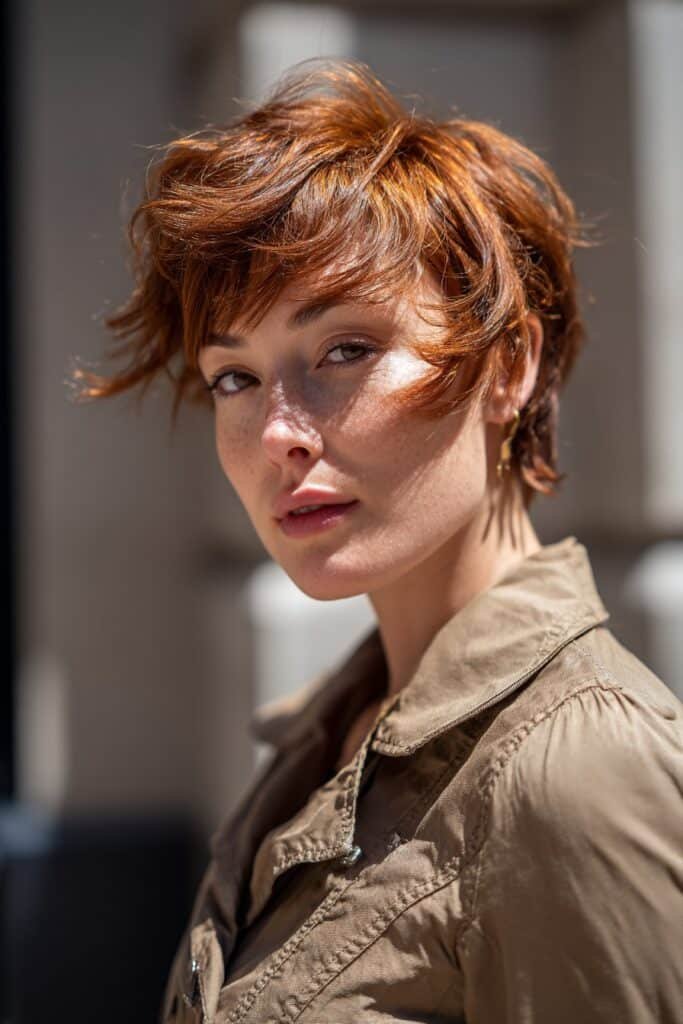
What it is and the unexpected power of short feathered hair
When most people think of feathered 70s hair, they picture long flowing locks, but shorter feathered styles were just as impactful during this era. The feathered pixie is a shorter cut that incorporates feathered layering at the crown, temples, and nape to create surprising volume and movement for a short style. It’s bold, it’s graphic, and it’s incredibly chic in a way that reads as both retro and thoroughly modern. I’ve put this style on clients who thought they could never pull off short hair, and without fail, they walk out of the chair feeling like the most powerful version of themselves. There’s something about a perfectly styled feathered pixie that communicates confidence in a way few other styles can match.
Best for petite frames and strong facial features
The feathered pixie works beautifully on petite frames because it avoids the top-heavy look that longer, voluminous styles can create on smaller body types. The volume is concentrated and intentional rather than overwhelming. For people with strong facial features — defined cheekbones, an angular jawline, or striking eyes — the feathered pixie provides a frame that highlights rather than competes with those features. The feathering adds softness without diminishing the power of the overall look.
How to style a feathered pixie for maximum impact
Styling a feathered pixie is actually wonderfully straightforward once you understand the principles. Apply a small amount of volumizing mousse to damp hair and use your fingers to push all the hair upward and forward from the nape. Using a blow dryer on a medium heat setting, direct the air forward and upward while using a small round brush or your fingers to lift the crown section into a soft pompadour-like shape. The feathered sections at the temples should be directed outward and back, creating those signature wing-like pieces on either side. Finish with a pea-sized amount of a light pomade or styling cream worked through the fingertips and pressed into the outer layers to define the feathering. A soft hold spray locks everything in place without making it look stiff.
Feathered Flip With Headband Accent
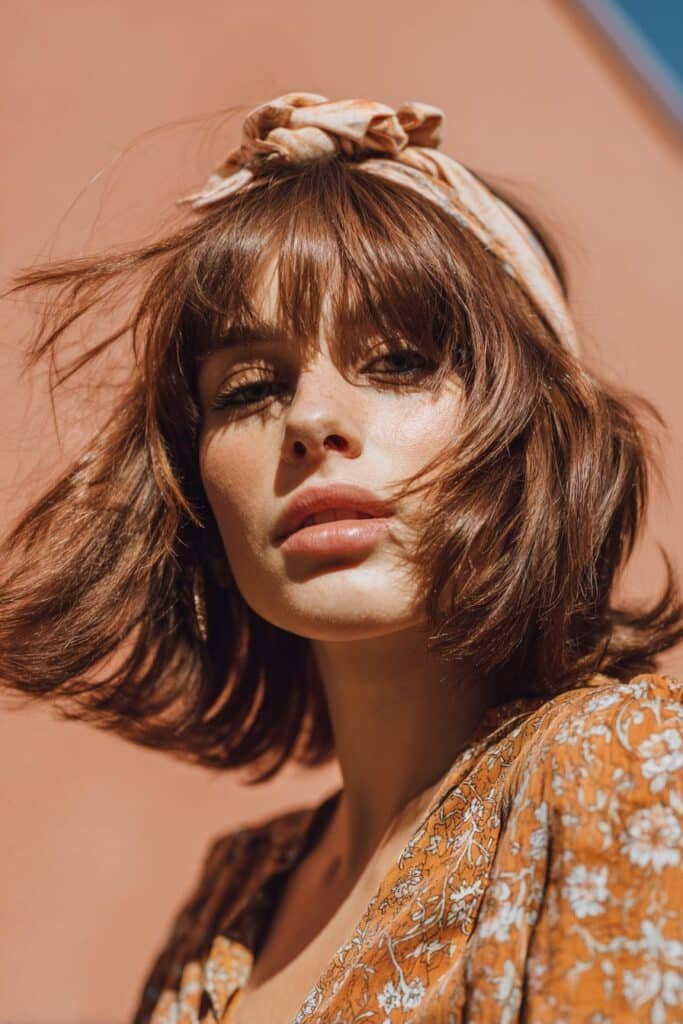
What it is and the accessory magic of 70s styling
One of the things that made 70s feathered hair so irresistible was how it interacted with the accessories of the era. The feathered flip with a headband accent takes the classic feathered styling techniques and elevates them with the addition of a wide, flat headband placed behind the hairline, which pushes the feathered layers forward and out, creating even more dramatic volume and movement. This combination was absolutely iconic during the decade and has been reimagined countless times since. As a makeup artist, I’m deeply aware of how accessories can transform a look, and nothing works quite as harmoniously with feathered hair as a well-placed headband.
Best for adding polish to casual feathered styles
If you love the texture and movement of feathered hair but want to add a touch of polish or intention to the look, the headband accent is your best friend. It works for a wide range of face shapes because the headband itself can be positioned to suit your proportions — worn further back for more forehead exposure, or closer to the hairline for a more covered, intimate framing effect. It works on almost any hair length as long as there’s enough feathering at the front to interact with the band.
How to perfect the headband feathered flip
Style your hair as you normally would for a feathered look, using your preferred technique whether that’s a round brush blow-dry, hot rollers, or a combination. Once the style is set, place your headband about an inch or two behind your natural hairline. Use your fingers or a wide-tooth pick comb to gently lift and push the front feathered sections forward over the band, creating a soft, voluminous puff of feathered hair at the front. Lightly backcomb the underside of this section before placing the headband for extra lasting power. Spritz with a medium-hold hairspray and use your fingers to arrange the layers so they fall naturally over and around the band. The rest of the hair can be left loose and feathered, or swept back for a more dramatic effect.
Feathered Flipped Ends On Shoulder-Length Hair
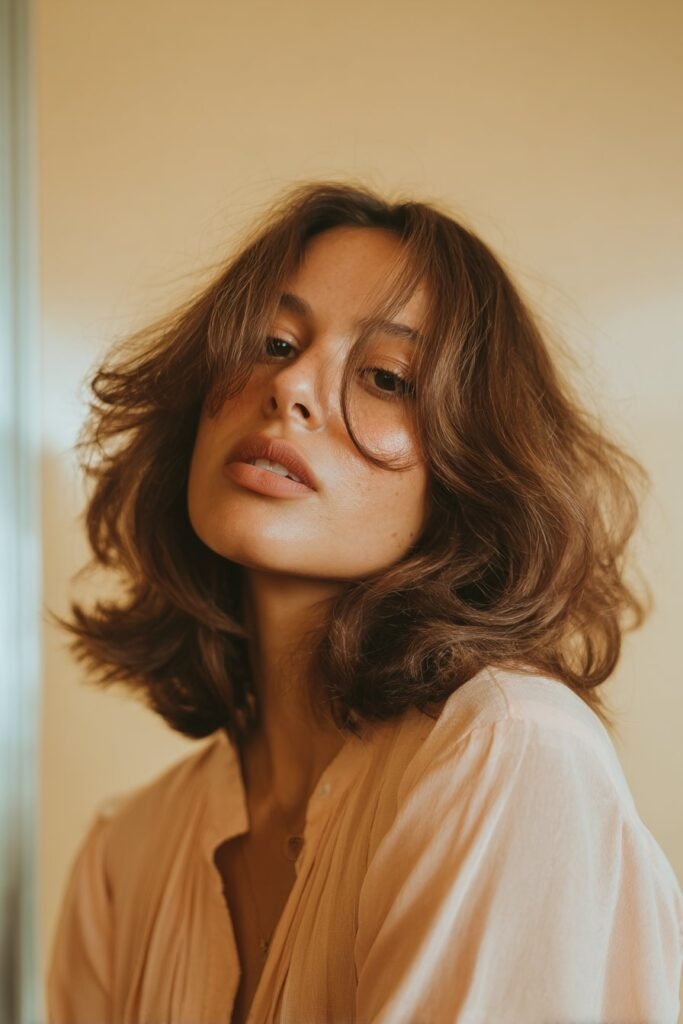
What it is and the understated elegance of it
This is one of the most versatile and wearable of all the feathered 70s styles, and it’s the one I most often recommend to clients who are new to the feathered aesthetic. Shoulder-length hair with feathered, flipped ends sits at a length that works for almost everyone and incorporates the feathering technique at the ends of the hair, where each layer is blown out and curled slightly upward and outward. It’s subtle enough for everyday wear but instantly gives any look a retro, polished quality that sets it apart from a plain blowout. I think of it as the entry point to 70s feathered hair — once people try it, they almost always want to go deeper into the style.
Best for transitioning hair lengths and first-time feathered styles
If you’re growing your hair out or caught between lengths, shoulder-length feathered flipped ends are a godsend. They work with the awkward in-between stage and actually make it look intentional and stylish rather than like you’re just waiting for more length. For anyone trying feathered styling for the first time, this look is forgiving and flexible — the flip can be subtle or dramatic depending on your comfort level, and the feathering at the ends can be as light or as textured as you prefer.
How to get beautiful flipped feathered ends
The flip technique is all about the round brush and the direction of your blow-dry. Section the hair from the bottom up and work in horizontal layers. For each section, place the round brush underneath the hair about three inches from the ends, roll it toward the ends, and then rotate the brush outward and upward as you pull it through. Direct the dryer’s heat downward while the brush is rolling outward — this combination creates the flip. For the feathered quality, use a light touch as you release the hair from the brush rather than pressing it flat. Repeat through all sections and then go back over the outermost layer with a large barrel curling iron for extra definition. Finish with a light hold spray and you’ve got a beautiful, wearable interpretation of 70s feathered hair.
Feathered Half-Up Style
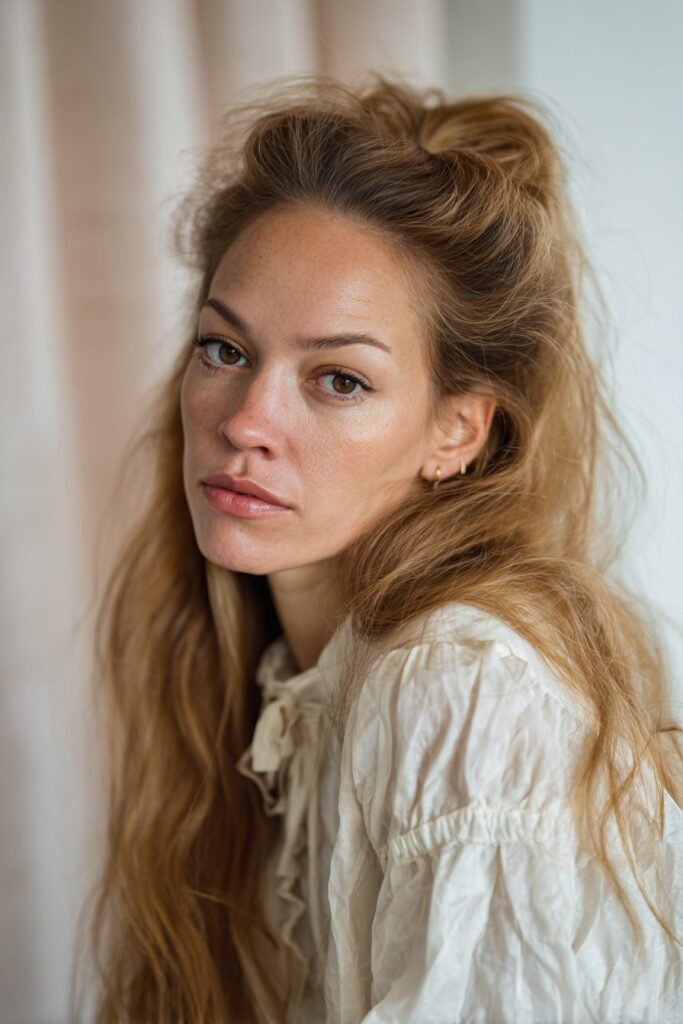
What it is and the playful versatility of it
The feathered half-up style takes the best elements of 70s feathered hair and combines them with a practical, beautiful updo variation. The top half of the hair is loosely gathered or clipped back — often with a decorative barrette or clip in keeping with the era — while the bottom half is left down and styled with full feathered layers and waves. The sections left down around the face frame it with soft, feathered movement, while the gathered top section adds height and a sense of intentional styling. I love this look because it solves the perennial “I want it up but I also want it down” dilemma in the most gorgeous possible way.
Best for hot days and active lifestyles
For my clients who are always on the move, the feathered half-up is a practical choice that doesn’t sacrifice style. The top section being gathered keeps hair off the neck and face during warm weather or physical activity, while the feathered layers below still look deliberately styled and beautiful. It also works wonderfully for events where you want to look polished without committing to a full updo — it reads as intentional and put-together while still being approachable and relaxed.
How to style a feathered half-up with 70s flair
Start by fully styling your hair in your preferred feathered technique — blow-dry with a round brush, add waves with a curling iron, whatever gives you your best feathered result. Once the style is complete, use a wide-tooth comb to gently part out the top section from roughly ear to ear across the crown. Gather this section loosely at the back of the crown — not too tight, you want it to look relaxed — and secure with either a decorative clip, a barrette, or a few bobby pins arranged artfully. Gently pull a few face-framing pieces loose from the gathering to soften the front. Then take the remaining loose sections around the face and use a small curling iron to add a few extra defined waves or flips to make sure they’re looking their most feathered and fabulous. A light spritz of shine spray over the entire style ties it all together.
Feathered Updo With Loose Tendrils
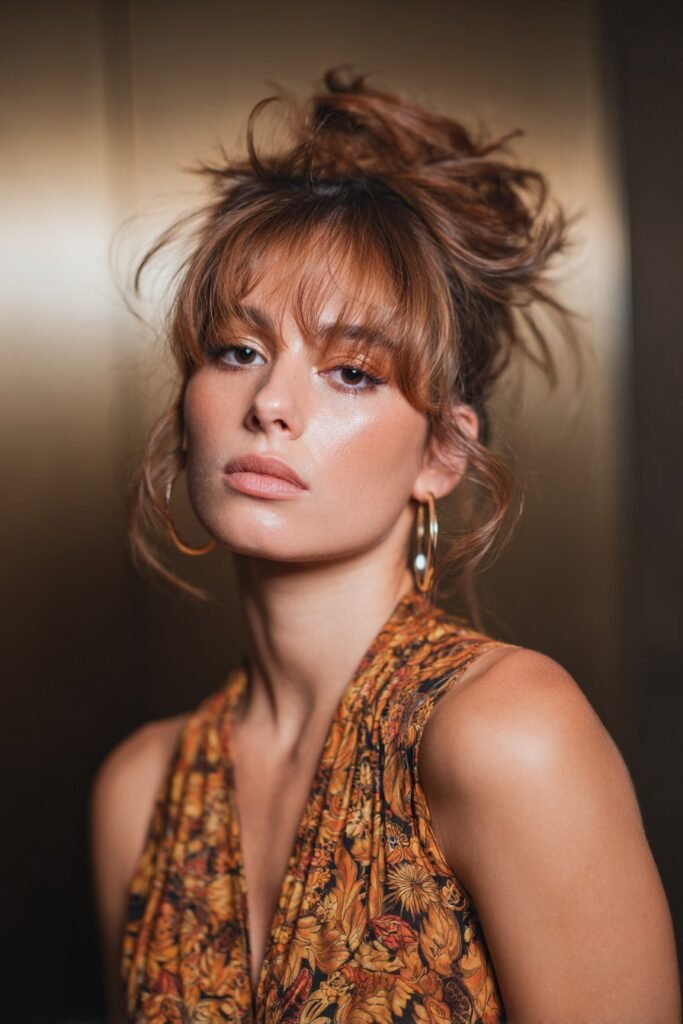
What it is and the romantic drama of structured 70s styling
The feathered updo with loose tendrils is the most glamorous and dramatic of all the feathered 70s styles, and it’s the one I reach for when a client is heading to a significant event or a high-profile appearance. In this style, the majority of the hair is gathered into a soft, textured updo — not a tight chignon, but something with volume and deliberate looseness — while strategically placed tendrils are pulled out and feathered to frame the face and nape of the neck. The tendrils are the defining element: they’re not accidental flyaways, they’re intentional, styled pieces that have been feathered to look light, wispy, and perfectly placed. This style was beloved in the 70s for formal occasions and has an eternal, timeless quality that never looks dated.
Best for formal events and long to very long hair
This style genuinely shines on long to very long hair because the updo has more material to work with, creating a more substantial, impressive gathered shape. For formal events, it strikes the perfect balance between structured and romantic — it looks like you made a genuine effort without looking overly severe or uncomfortable. The feathered tendrils are particularly important in softening what might otherwise look like too formal a style, keeping it in the spirit of the free, expressive 70s aesthetic.
How to create a feathered updo with gorgeous tendrils
Begin by deciding which tendrils you want to frame your face — typically two pieces at the temples, one or two at the cheekbones, and one at each side of the nape. Clip these sections out of the way before beginning the updo. Gather the rest of the hair into a soft, high or mid-level bun or twist, securing loosely with pins to preserve volume. The bun should have some texture and movement — use your fingers rather than a brush to arrange it, and pull a few sections slightly loose to create that soft, imperfect quality. Now take your reserved tendril sections and use a small curling iron to create soft, loose curls, then pull the curl gently downward with your fingers to elongate it and use a fine-tooth comb to very lightly feather the ends. Let the tendrils fall naturally around your face and use a tiny amount of holding spray just to prevent them from going completely limp. The result is genuinely one of the most beautiful things you can do with feathered hair.
Two-Tone Feathered Layers
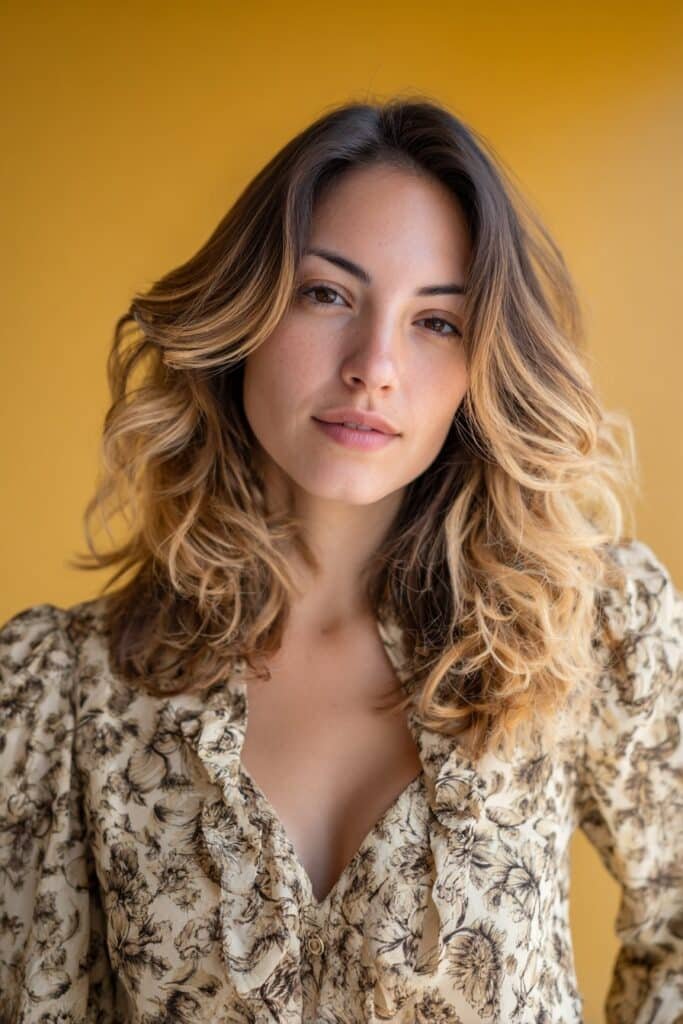
What it is and the bold artistic vision behind it
The 70s were not a decade of playing it safe, and two-tone feathered layers are the proof. This style combines the structural technique of feathered layering with a deliberate two-tone color approach — typically darker underneath and lighter on top, or a warm base with lighter, sun-kissed highlights throughout the feathered layers. The color contrast amplifies the visual impact of the feathering itself, because as each layer catches the light differently, the variation in tone makes the movement and dimension of the style dramatically more visible. As a makeup artist who understands color deeply, I find this style endlessly fascinating because the relationship between the color placement and the cut creates something genuinely artistic.
Best for showcasing layered cuts and adding dimension to fine hair
Two-tone feathered layers are spectacular for fine hair because the color contrast creates the visual illusion of thickness and depth that the hair itself may not have naturally. When you look at a head of fine hair with thoughtful two-tone feathering, your eye perceives multiple layers of different tones and assumes the corresponding depth and volume. It’s a beautiful optical trick that I recommend often. For anyone who has invested in a beautiful layered feathered cut, the two-tone coloring is the finishing touch that makes the cut visible and impactful from across a room.
How to style two-tone feathered layers for maximum impact
The styling here is really about letting the color do its work while the feathering technique does the rest. Use a light, flexible hold mousse on damp hair before blow-drying to give the layers enough body to separate and show their individual tones. Blow-dry with a round brush as you would for any feathered style, directing each section to fall where it shows the most color contrast. Once dry, use a large-barrel curling iron selectively on the top, lighter layers to make them pop visually against the darker underneath layers. A glossing spray or shine serum applied to the surface brings out the richness of both tones and makes the overall style look incredibly polished and intentional. In editorial work, I often finish this look with a light dusting of a shimmering setting powder along the part and crown to catch the light and add an extra dimension that photographs beautifully.
Conclusion
I’ll be completely honest with you — writing this piece took me back in the most wonderful way. It reminded me of why I fell in love with beauty in the first place, sitting in that vanity chair in Savannah watching my mother’s feathered hair move as she turned her head, so alive and expressive and full of personality. Beauty has always been about more than appearance to me. It’s about how a hairstyle makes you feel when you catch your reflection in a window. It’s about the confidence that comes from knowing your hair looks exactly the way you intended it to. It’s about the joy of connecting to a creative tradition that stretches back generations.
What makes 70s feathered hair so enduringly beautiful and so culturally resonant is that it was never about perfection. It was about movement, individuality, and a certain fearlessness. The women who wore these styles weren’t trying to look perfect — they were trying to look like themselves, amplified and celebrated. And that philosophy is one I carry into every single thing I do as a beauty artist and educator.
If there’s one thing I’ve learned across my years working in this industry, it’s that the styles we return to again and again do so because they tap into something fundamentally true about beauty. Feathered hair moves. It breathes. It responds to the world around it — to wind, to light, to laughter. It doesn’t sit still and it doesn’t pretend. There’s something deeply human about that.
Whether you’re inspired by the classic voluminous flip, the rock-and-roll energy of the feathered shag, the romantic drama of feathered tendrils, or the subtle everyday beauty of flipped ends, I hope this guide gives you the confidence to explore these styles and make them your own. Don’t be afraid to adapt, experiment, and play. The 70s were about freedom of expression above all else, and that’s a spirit worth carrying into every era that follows.
As I always say, makeup and hair aren’t about hiding anything — they’re about amplifying your best self, telling your story, and showing the world who you are with complete confidence. Your hair is one of the most expressive tools you have. Use it boldly, use it joyfully, and never stop experimenting. The world is always ready for a little more feathered magic.