
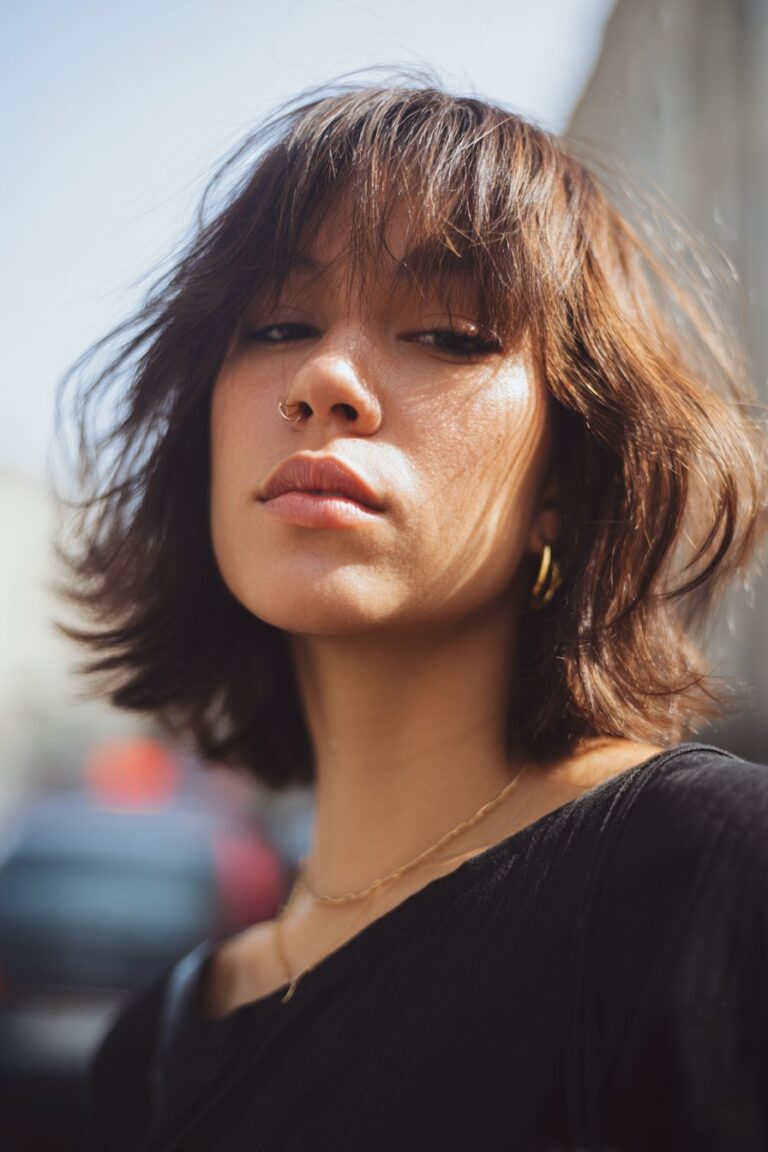
If you have fine hair and have been dreaming about a lob, I want to be the first one to tell you — this is your moment. I’m Belle Hathaway, and fine hair has always held a very special place in my heart and in my kit. Over the years working with clients across red carpets, editorial shoots, and everyday beauty consultations, I’ve encountered fine hair in every form imaginable. And let me tell you something I truly believe: fine hair is not a limitation. It’s a canvas. The lob — that gorgeous, chin-to-collarbone length cut — is honestly one of the most flattering, transformative styles you can choose for fine hair, especially when you add bangs into the mix. Bangs create the illusion of thickness, frame your face beautifully, and give your entire look a fresh, intentional energy. So today, I’m walking you through sixteen stunning lob haircuts for fine hair with bangs, and sharing everything you need to know to wear them with complete confidence.
Classic Blunt Lob with Straight Bangs
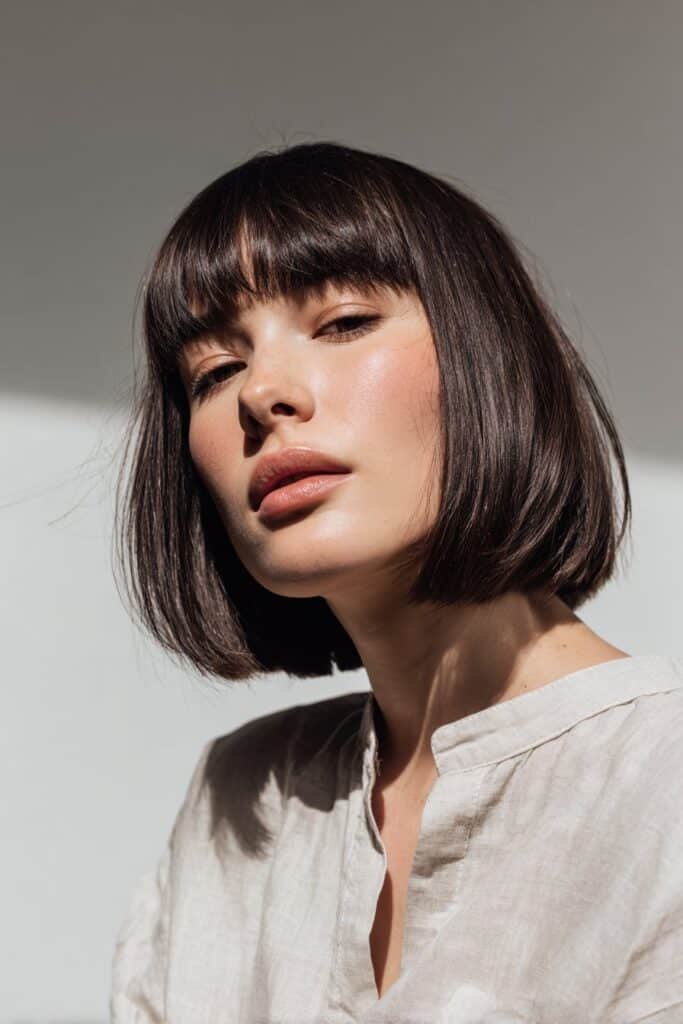
There is something timeless and undeniably chic about a clean, blunt lob paired with straight-across bangs. This is one of the first styles I recommend to fine-haired clients who come to me feeling a little lost about what to do with their hair. It’s structured, it’s intentional, and it works every single time.
What is it
The classic blunt lob sits anywhere between the chin and the collarbone, cut in a single, clean horizontal line with no layers or graduation. The straight bangs fall across the forehead and are also cut bluntly, typically landing just above the eyebrows or at brow level. The result is a sharp, geometric shape that feels very editorial and put-together. What makes this style so powerful for fine hair is the optical illusion it creates — the blunt ends trick the eye into seeing density and weight that fine hair sometimes struggles to show naturally.
How it works best for fine, straight hair
This style is absolutely made for fine, straight hair. When your hair is naturally smooth and lacks natural volume, the blunt cut maximizes the visual impact of every single strand. Rather than thinning out into wispy ends, your hair appears full and intentional from root to tip. The straight bangs add another horizontal line of thickness across the front of your face, essentially doubling the impression of fullness. I’ve watched clients with the finest hair walk out of the salon looking like they had twice the hair they came in with, simply because of this cut.
How to make it work — tips
Ask your stylist to cut the lob on dry hair if possible, as wet hair can shrink and alter the final length. Use a thickening spray on damp hair before blow-drying, then blast your ends with a flat brush to reinforce that blunt line. Avoid heavy oils or serums on your lengths — they will weigh fine hair down instantly. A lightweight, flexible hold hairspray to lock in that blunt shape is your best friend here.
Layered Lob with Curtain Bangs
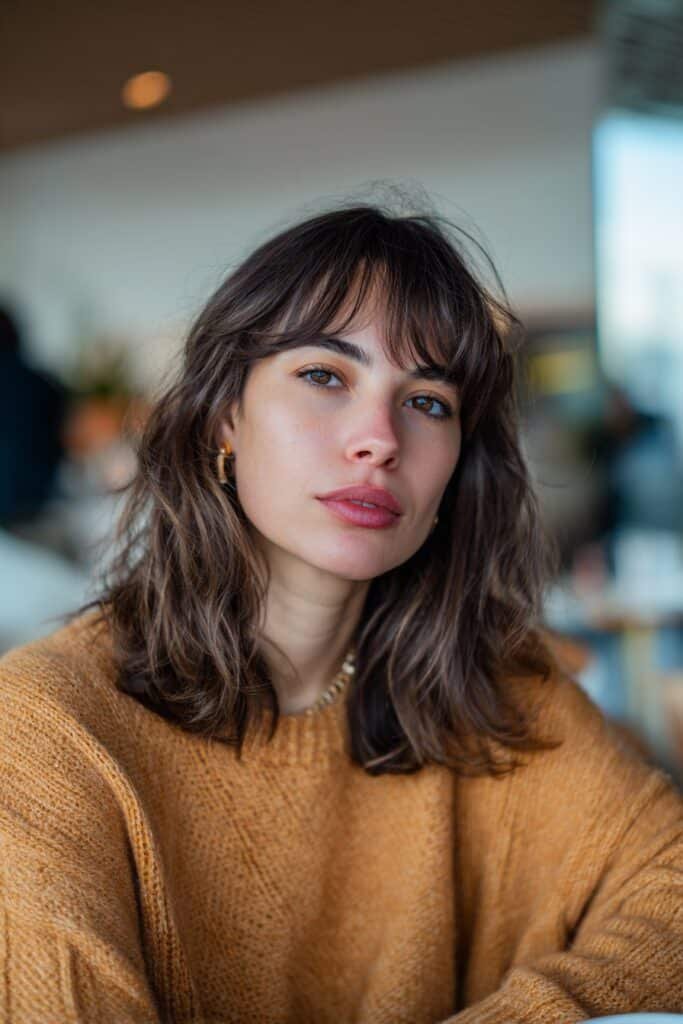
If the blunt lob is the powerhouse, the layered lob with curtain bangs is the romantic. I adore this combination for fine-haired clients who want movement, softness, and a style that feels effortlessly beautiful without looking overly done.
What is it
The layered lob incorporates soft, internal layers throughout the length, creating movement and dimension that sits beautifully at lob length. Curtain bangs — those gentle, face-framing pieces that part down the middle and sweep outward on both sides — complete the look with a bohemian, effortless quality. This combination is one of my personal favorites because it feels very alive when it moves.
How it works best for fine hair with natural wave
If your fine hair has any natural wave or texture to it, this style will absolutely unlock its potential. The layers work with your natural movement rather than against it, encouraging your hair to fall in soft, organic ways that look anything but flat. Curtain bangs are particularly brilliant for fine hair because they don’t require a dense, heavy fringe — their open, parted structure means you’re not demanding too much from your limited hair density at the front.
How to make it work — tips
Ask your stylist for soft, long internal layers that don’t start too close to the root. Layers beginning too high can make fine hair look thinner at the sides. Scrunch a volumizing mousse through damp hair and let it air-dry for natural movement, or use a diffuser if you have a slight wave. Refresh curtain bangs with a small round brush and a touch of heat to keep them sweeping softly away from your face.
Textured Lob with Baby Bangs
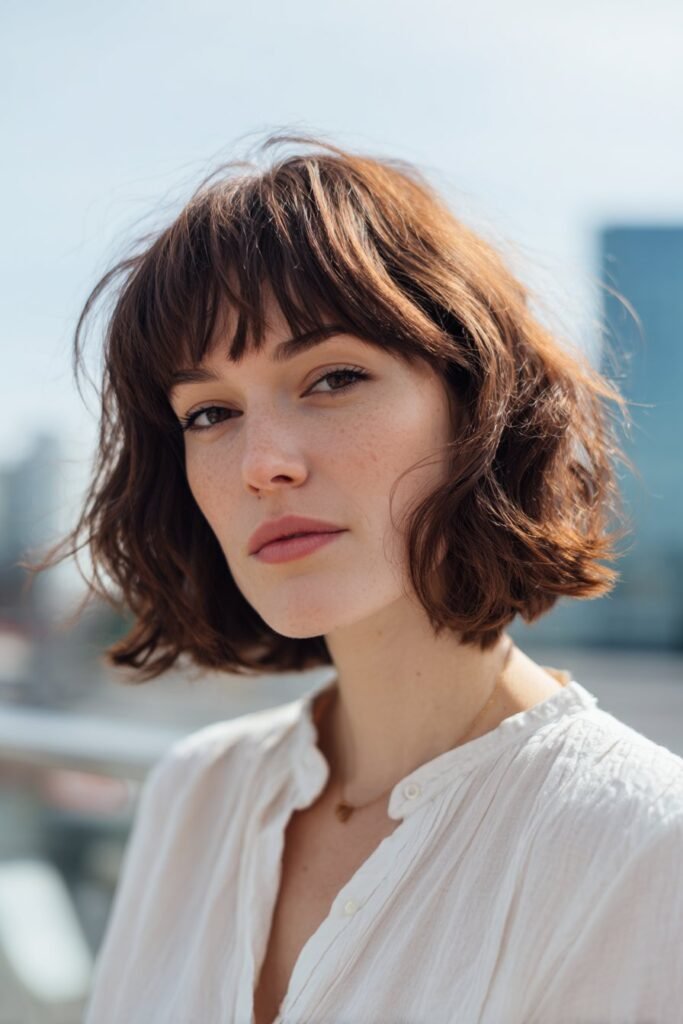
Texture is fine hair’s greatest ally, and I’ve built entire looks around this philosophy. A textured lob with baby bangs is one of those styles that looks like it took effort but is actually incredibly wearable day to day.
What is it
A textured lob uses point-cutting or razor techniques to create soft, feathery ends throughout the cut rather than blunt, uniform lines. baby bangs grow from one side of the part, sweep across the forehead, and blend seamlessly into the rest of the length. Together, they create a look that feels natural, modern, and very flattering for a wide range of face shapes.
How it works best for adding movement to flat, fine hair
Fine hair can sometimes lie very flat against the head, which is where texture becomes transformative. The jagged, soft ends created by point-cutting catch light differently across the length and give the illusion of layers and body even in the absence of true volume.Babyt bangs work brilliantly here because they add visual interest at the front of the face without requiring a dense section of hair at your hairline.
How to make it work — tips
Work a texturizing spray or dry shampoo through the lengths and ends, then scrunch and tousle with your fingers. Avoid brushing textured lobs too aggressively as you’ll lose the definition in those ends. For the side-swept bangs, a small flat iron or a round brush with gentle heat helps direct them smoothly across the forehead. Re-apply dry shampoo at the roots every second or third day to maintain that lived-in texture.
Wavy Lob with Wispy Bangs
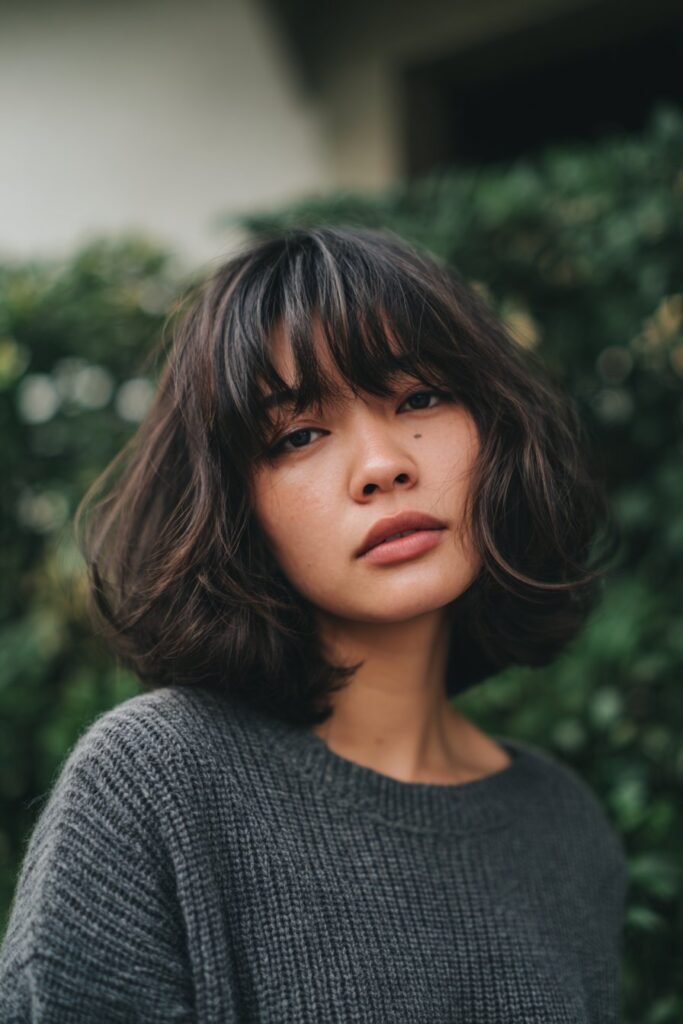
Oh, this one. This is the style I find myself recommending constantly to clients who want to look like they woke up effortlessly beautiful. The wavy lob with wispy bangs has a dreamy, undone quality that works across ages and lifestyles.
What is it
The wavy lob incorporates loose, beachy waves through lob-length hair, giving it a relaxed, dimensional appearance. Wispy bangs are thin, feathery pieces at the forehead that are cut with a razor or point-cut technique to appear airy and soft rather than heavy. The pairing creates a look that feels very romantic and French-inspired — the kind of hair you see on someone walking through a sunlit market and immediately think “how does she do that?”
How it works best for fine hair needing body
Fine hair benefits enormously from wave because waves literally take up more visual space than straight hair. When you add waves to your lob, each strand appears to have more substance simply because of its new shape. Wispy bangs are ideal for fine hair because they don’t demand density — in fact, a barely-there fringe looks intentional and beautiful when kept light and airy.
How to make it work — tips
Use a one-inch curling wand, alternating the direction of each wave away from your face. Leave the ends out of the iron for a more natural, undone finish. Scrunch a small amount of sea salt spray through the lengths and let them cool before touching. Trim wispy bangs yourself between appointments using small, diagonal snips to maintain that feathery texture at home.
Choppy Lob with Micro Bangs
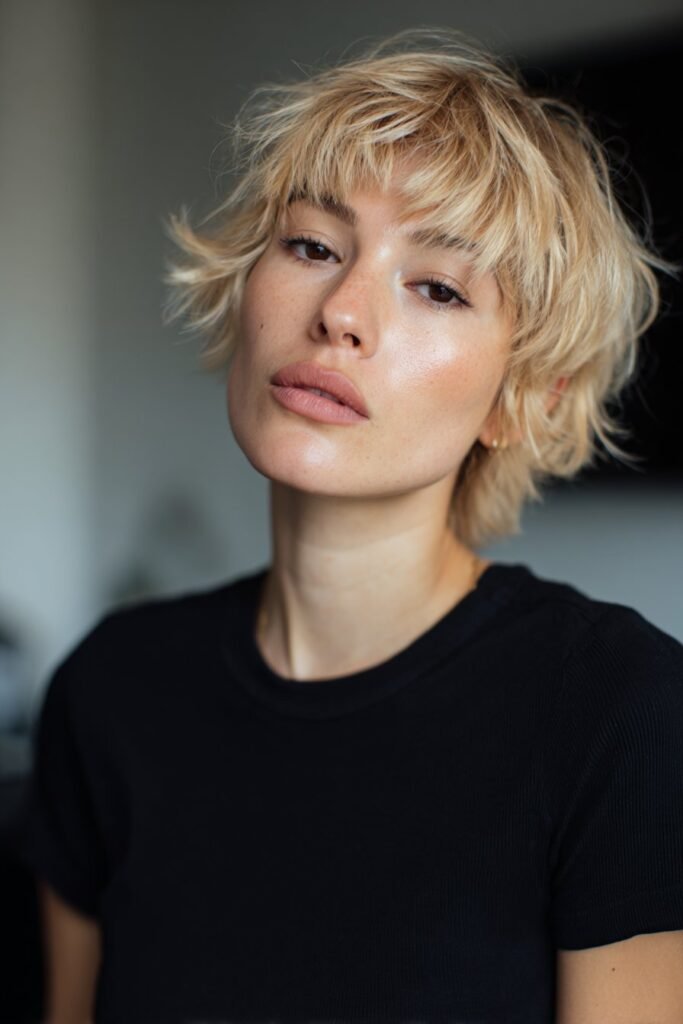
Bold, unexpected, and genuinely stunning on the right person — the choppy lob with micro bangs is for the fine-haired woman who wants to make a real statement.
What is it
A choppy lob uses heavy point-cutting or razor work to create dramatic, uneven texture throughout the length, giving the hair a raw, editorial energy. Micro bangs sit very high on the forehead, landing above the brows, and are cut in a short, blunt or slightly textured line. Together, these elements create a look that is striking, confident, and decidedly fashion-forward.
How it works best for fine, straight hair
Fine, straight hair actually carries the choppy lob beautifully because the smoothness of the hair allows the textured ends to read clearly and with purpose. Rather than fighting against your hair’s natural sleekness, this style leans into it. Micro bangs add an unexpected punctuation mark at the top of the look that draws attention upward and creates the appearance of a very intentional, styled haircut.
How to make it work — tips
Keep the lengths sleek with a flat iron to contrast beautifully against the choppy ends. A small amount of light-hold wax or pomade worked through the ends adds definition and separation. Micro bangs require more frequent trims — every three to four weeks — to stay in that perfect sweet spot above the brows. Between trims, use a fine-tooth comb and a tiny bit of hairspray to keep them lying flat and precise.
Asymmetrical Lob with Curtain Bangs

If you want a lob that feels truly unique and stands out from the crowd, the asymmetrical version with curtain bangs is something I encourage every fine-haired client to consider. I’ve created this look many times and it never fails to make an impression.
What is it
An asymmetrical lob is deliberately cut longer on one side than the other, creating a diagonal line through the hair that adds visual interest and movement. When paired with curtain bangs that part softly in the middle, the contrast between the symmetrical, gentle bangs and the asymmetrical length creates a look that feels both artistic and effortlessly cool.
How it works best for fine hair with more volume on one side
Many people with fine hair notice that their hair naturally falls more fully on one side. An asymmetrical lob can actually work with this natural tendency, allowing the heavier side to anchor the longer length while the shorter side appears equally full. Curtain bangs bring balance to the front of the face, creating a soft focal point that ties the whole asymmetrical look together beautifully.
How to make it work — tips
Communicate very clearly with your stylist about how dramatic you want the asymmetry — a subtle half-inch difference reads as modern and intentional, while a longer difference reads as bold and editorial. Style the longer side with a slight wave to maximize its visual weight. Curtain bangs can be styled loosely with just your fingers and a hairdryer on low heat for a soft, natural finish that complements the overall relaxed asymmetry.
Shaggy Lob with Brow-Skimming Bangs
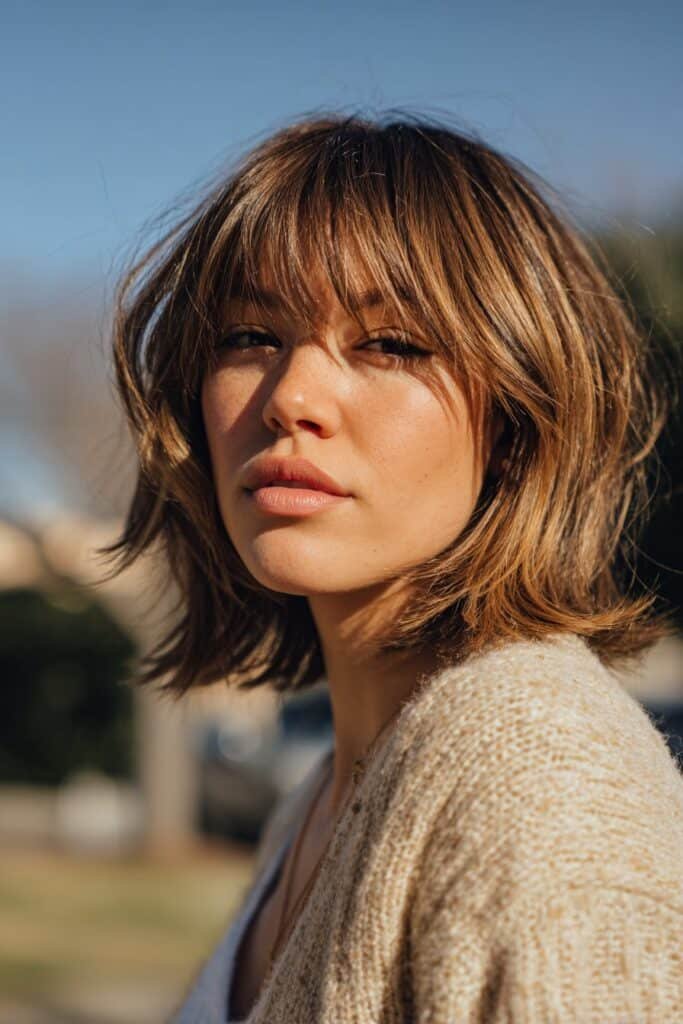
The shaggy lob is having such a well-deserved moment right now, and I am fully here for it. For fine hair, this style is a revelation.
What is it
A shaggy lob, sometimes called a “shabby” cut, features heavy layering throughout the length and at the crown, with deliberately textured and undone-looking ends. Brow-skimming bangs land right at or just touching the eyebrows, often with soft, feathery texture rather than a blunt edge. The overall effect is very rock-and-roll meets bohemian — effortlessly cool without trying too hard.
How it works best for fine, limp hair needing life
This is genuinely one of the best possible cuts for fine hair that tends to look flat or lifeless. The heavy layering removes weight from the ends, which is the opposite of what you might think — by removing bulk at the ends and redistributing the layers throughout, you actually create lift at the root and bounce through the midsection. Your hair suddenly has personality. Brow-skimming bangs add visual density at the forehead while the rest of the cut does all the heavy lifting in terms of movement.
How to make it work — tips
Use a volumizing shampoo and conditioner as your foundation. Apply a root-lifting spray before blow-drying and flip your head upside down for the first minute of drying to build crown volume. Tousle the lengths with your fingers rather than brushing to preserve that intentionally undone texture. For brow-skimming bangs, a tiny flat iron or a wide-tooth comb with light heat shapes them beautifully without making them look stiff.
Feathered Lob with Soft Fringe
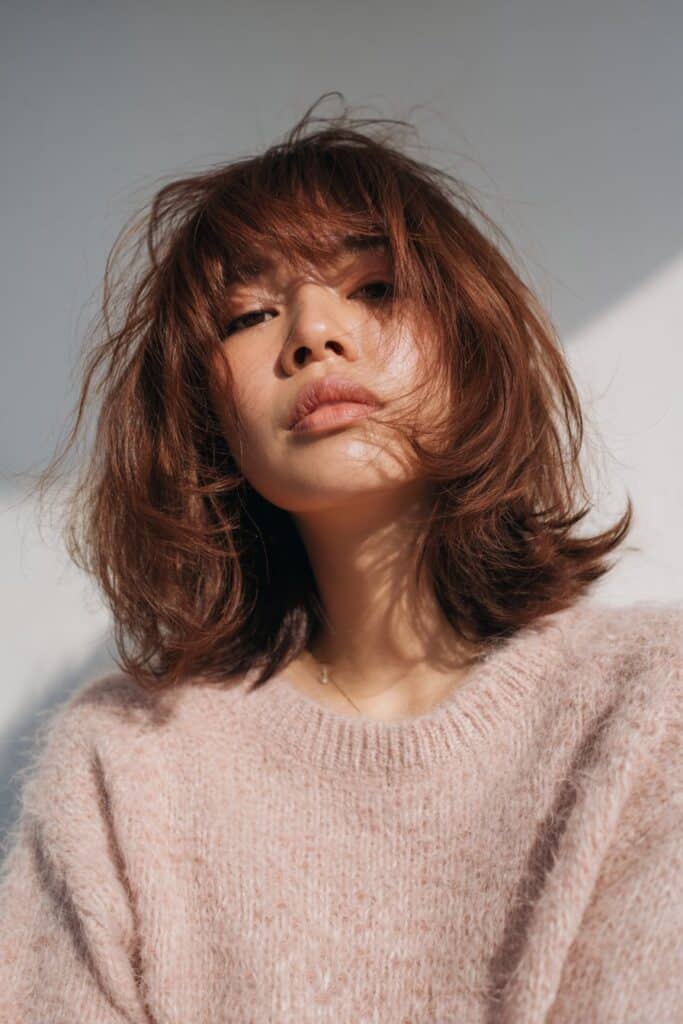
There is a warmth and femininity to the feathered lob with soft fringe that I find deeply beautiful. This is the style for the fine-haired woman who wants something that feels gentle, romantic, and timeless.
What is it
A feathered lob uses long, flowing layers that are styled outward or lightly flipped at the ends, creating that classic, soft-wings effect throughout the hair. A soft fringe sits across the forehead with a gentle, wispy texture — not quite as heavy as a classic blunt fringe, but more present than wispy micro-fringe. Together, they create a look that feels very warm and face-framing.
How it works best for fine, fine-textured hair of all lengths within the lob range
The feathered technique is extraordinarily kind to fine hair because the styling itself — flipping and directing ends outward — adds visual width and volume naturally. You don’t need a lot of hair to pull off a feathered lob; in fact, the lighter your hair, the better it responds to that outward styling direction. Soft fringe adds a focal point at the center of the face that draws attention beautifully.
How to make it work — tips
Use a round brush during blow-drying, rotating it outward at the ends to build that classic feathered flip. Work from underneath the hair, pointing the dryer downward for smoothness, then curling the brush outward at the final moment. A light-hold hairspray over the finished style holds the feather without stiffness. Trim the soft fringe every four to five weeks to keep it landing in that perfect spot just above the eye area.
Blunt Lob with Middle-Part Bangs
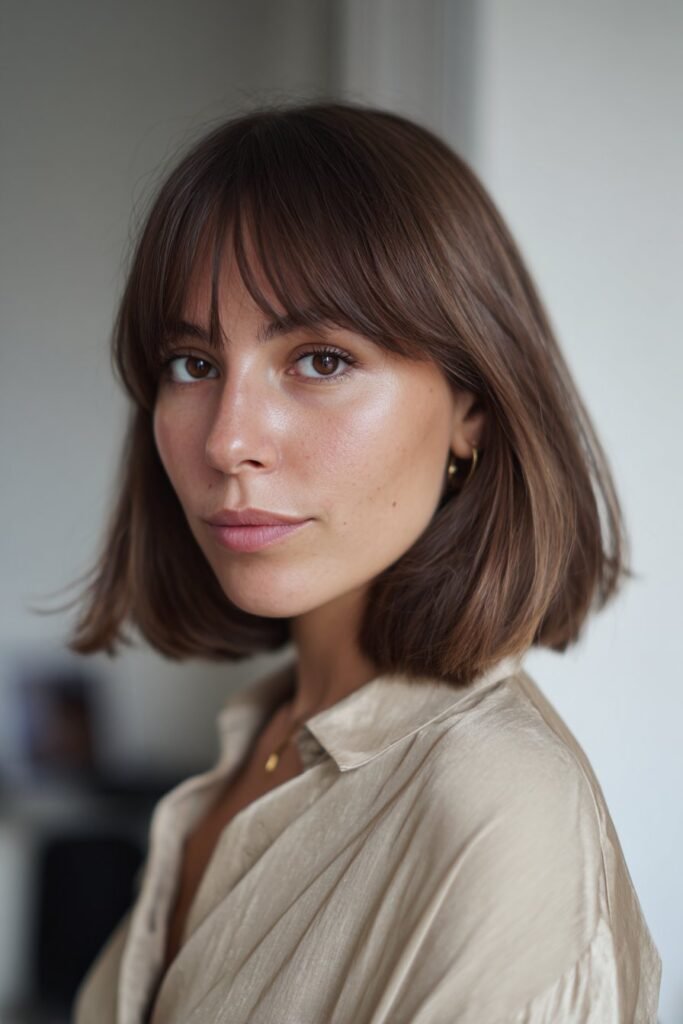
The middle-part bang has become one of the most-requested styles I see, and combined with a blunt lob, it creates something genuinely stunning for fine hair.
What is it
Middle-part bangs divide at the center of the forehead and fall on either side, creating a curtain-like effect. Unlike traditional curtain bangs, middle-part bangs tend to be cut slightly shorter and more blunt, sitting closer to the center of the face before sweeping softly to the sides. Paired with a blunt lob, the clean precision of the cut creates a look that feels very modern, editorial, and sophisticated.
How it works best for fine hair with a strong face structure
Middle-part bangs elongate and balance the face in a very flattering way, making them particularly beautiful for oval, heart-shaped, and longer face shapes. For fine hair, the blunt lob underneath provides that visual weight foundation, while the middle-part bangs add a refined focal point at the top without demanding too much from your hair’s density at the hairline.
How to make it work — tips
Ask your stylist to cut middle-part bangs slightly longer than you think you want them — they tend to look best when they land at cheekbone level or just below, and you can always trim more. Style them by blowing each side outward with a small round brush. A tiny amount of lightweight serum through the bang pieces adds a polished, glossy finish that looks incredibly intentional and chic on fine hair.
Face-Framing Lob with Airy Bangs
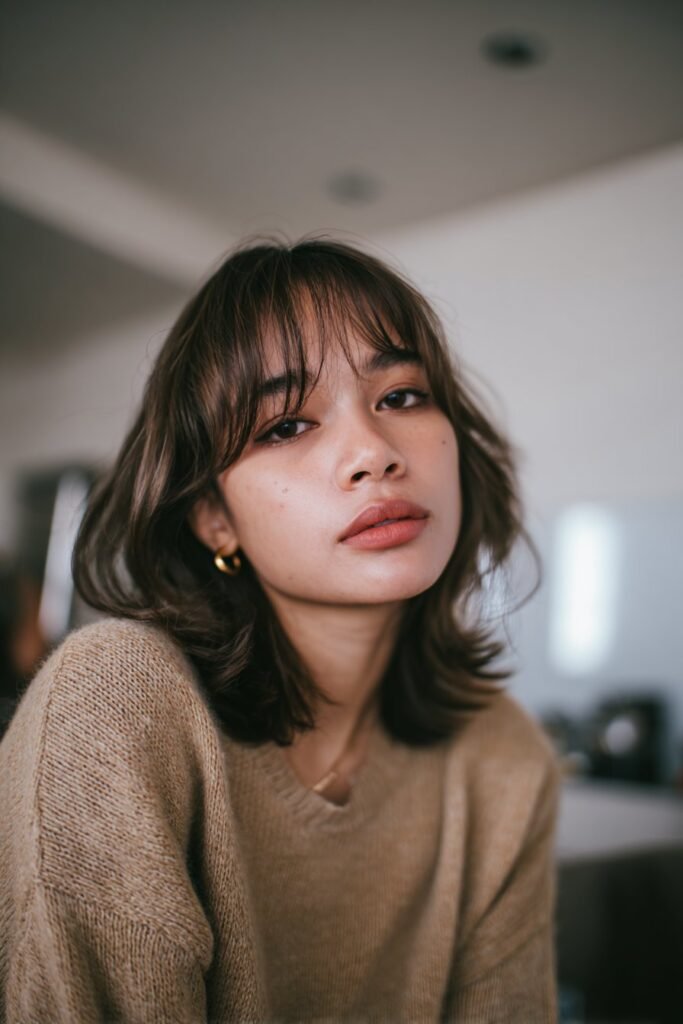
Few things in beauty give me as much joy as watching face-framing techniques transform the way someone feels about their hair. This style is pure magic for fine hair.
What is it
A face-framing lob incorporates longer, softened pieces at the front of the cut that taper or blend toward the face, drawing the eye naturally to the person’s features. Airy bangs — very thin, barely-there pieces across the forehead — add a delicate, almost ethereal quality to the look. Together, this combination is incredibly flattering and works on virtually every face shape.
How it works best for fine hair on oval and heart-shaped faces
The face-framing elements in this cut do the work that fine hair sometimes struggles to do on its own — they direct attention, create structure, and make the overall look feel intentional and polished. Airy bangs are tailor-made for fine hair because their lightness is not a compromise; it’s actually the desired effect. They sit lightly across the forehead without demanding density, and they create the softest, most delicate fringe imaginable.
How to make it work — tips
Ask your stylist to cut the face-framing pieces on an angle toward the face for maximum effect. Style those front pieces with a small round brush or a flat iron set to medium heat, directing them inward slightly to hug your face. Airy bangs need minimal maintenance — a quick blast of warm air and a gentle comb is all they need. Avoid over-loading these delicate pieces with product, as even a small amount of serum or cream can weigh them down visibly.
Graduated Lob with See-Through Bangs
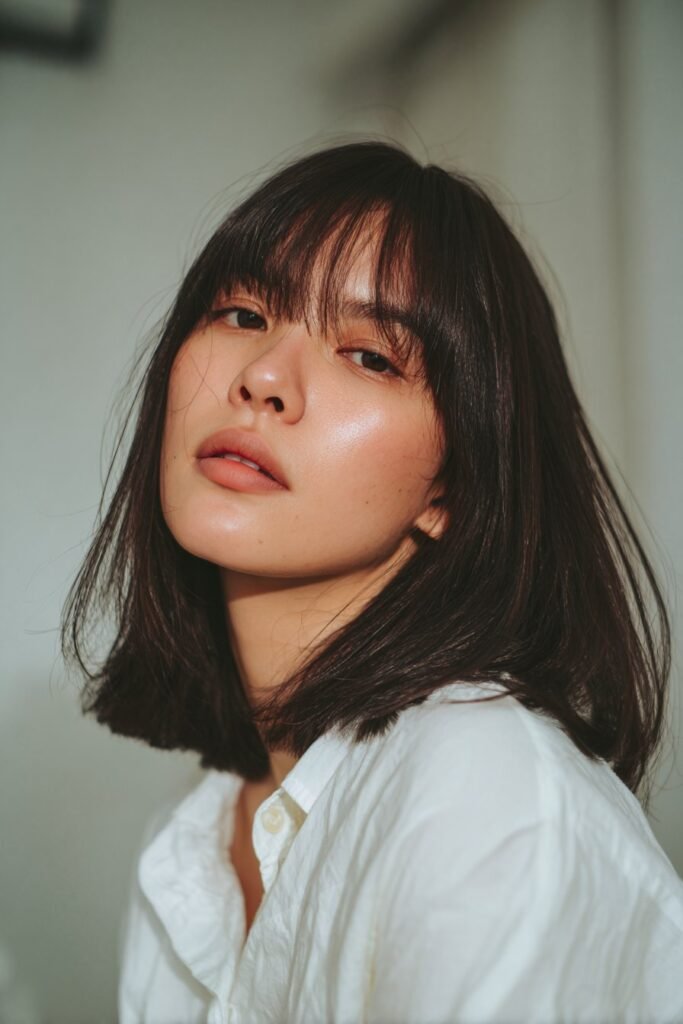
See-through bangs changed everything for my fine-haired clients who desperately wanted fringe but were afraid of looking sparse. This is one of my most successful style combinations.
What is it
A graduated lob is cut longer in the back and gradually shorter toward the front, creating a slight angle through the hair that adds visual interest and the appearance of depth. See-through bangs are incredibly light, sheer fringe pieces that you can literally see through — they sit across the forehead in a thin, transparent layer that hints at a fringe without committing to a dense one. The combination feels very Parisian and very cool.
How it works best for fine hair with a visible scalp
This is the style I specifically recommend for clients whose fine hair is also on the thinner side, meaning they have some scalp visibility they feel self-conscious about. See-through bangs are truly the answer here — they sit across the forehead covering any visible hairline concerns while looking completely intentional and fashionable rather than sparse. The graduated lob adds shape and movement that draws the eye down and away from any areas of concern.
How to make it work — tips
See-through bangs should be cut from a very small, narrow section at the very front of the hairline to keep them appropriately light. Your stylist should use a razor or point-cut technique rather than blunt scissors for the most natural transparency. Style them simply with a fine-tooth comb and a warm dryer — no heavy product. The graduated lob looks beautiful styled smooth with a flat iron, which enhances that clean diagonal line through the length.
Collarbone Lob with Butterfly Bangs
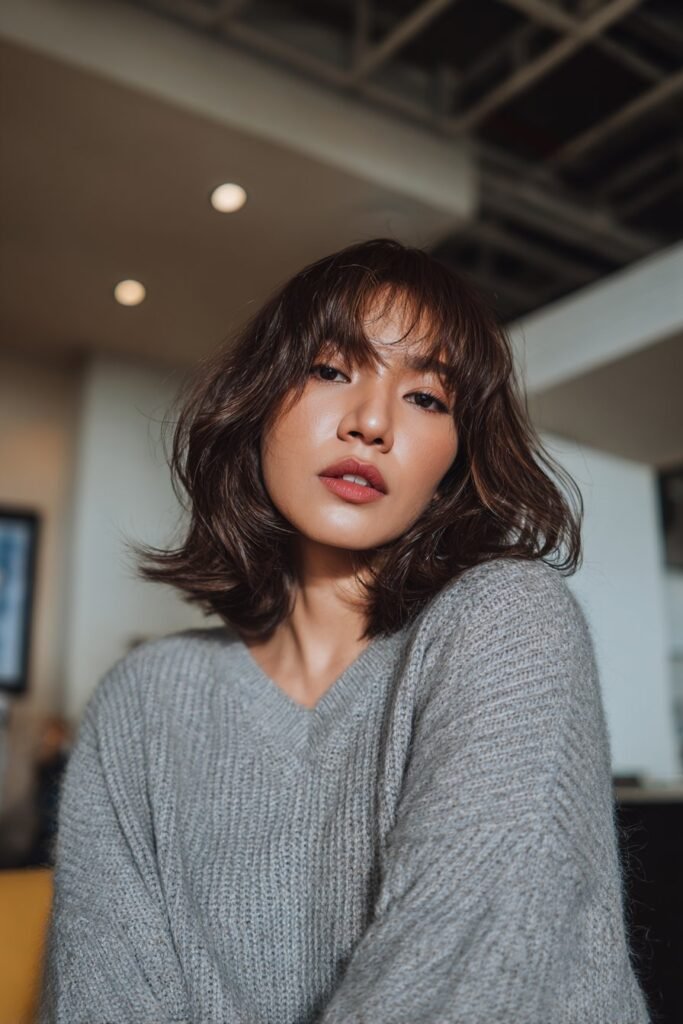
The butterfly bang is one of those styles that takes your breath away when it works, and with fine hair at collarbone lob length, it is absolutely breathtaking.
What is it
The collarbone lob sits right at the collarbone — one of the most universally flattering lengths for a lob cut. Butterfly bangs are longer, face-framing pieces that taper from longer at the sides to slightly shorter at the center, creating a soft arch that mimics the shape of butterfly wings across the forehead and cheekbones. This fringe is dramatic, romantic, and unlike almost anything else you’ll see.
How it works best for fine hair on expressive, angular faces
The butterfly bang’s shape works brilliantly with fine hair because it’s designed to be light and flowing by nature. The pieces sit softly against the face rather than sticking straight out, meaning fine hair’s tendency to lie flat actually helps them drape beautifully. On angular or defined faces, this soft arch softens strong features and creates a beautifully romantic contrast.
How to make it work — tips
Butterfly bangs require a skilled stylist who understands face-mapping — make sure you look at reference photos together. Style them by curling the pieces softly inward with a small curling wand, then gently separating with your fingers for a feathery, open quality. For the collarbone lob, a few loose waves at the ends elevate the whole look from beautiful to extraordinary.
Razored Lob with Piece-y Bangs
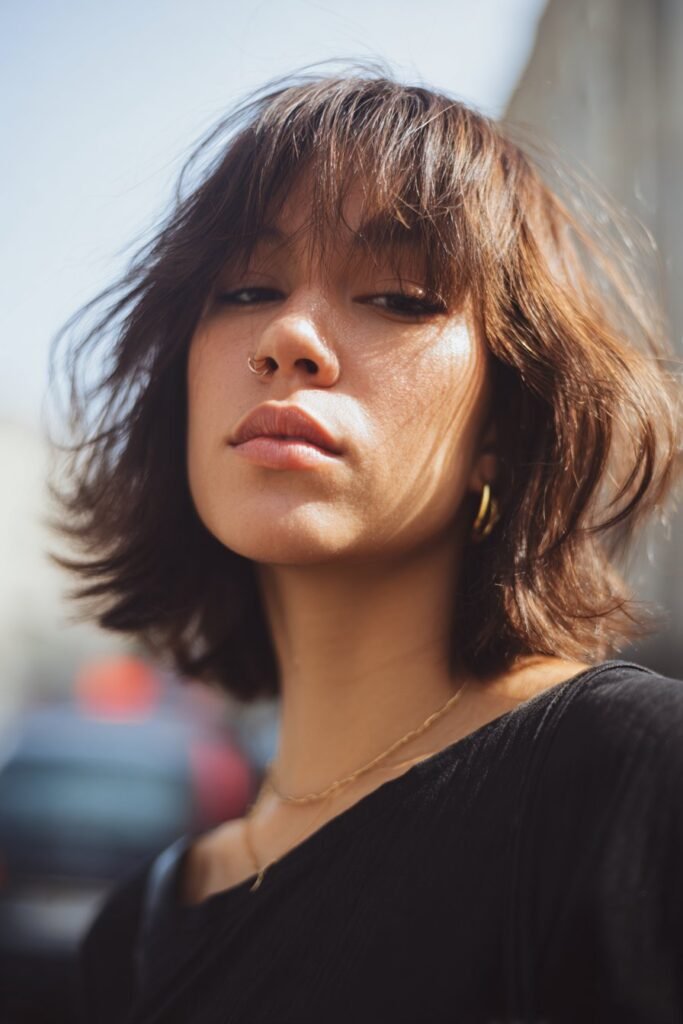
This is my pick for the fine-haired client who loves a look with edge, attitude, and a lot of visual personality.
What is it
A razored lob is cut using a razor rather than traditional scissors, which creates incredibly soft, broken-up ends throughout the length. The result is a lob that looks almost effortlessly undone, with a raw, cool-girl energy. Piece-y bangs are separated into distinct sections across the forehead, styled with a tiny amount of product to look intentionally separated rather than solid. Together, these elements create a look that is textural, interesting, and very modern.
How it works best for fine hair wanting edge without bulk
The razor cut is genuinely transformative for fine hair because it removes weight in a soft, gradual way that never makes the hair look thin — instead, it makes it look intentionally light and textural. Piece-y bangs solve the fine hair fringe problem perfectly: instead of trying to create the appearance of a dense fringe, you lean into separation and let individual pieces tell the story. The result looks like art.
How to make it work — tips
Work a small amount of light-hold paste or wax through your bangs, using your fingers to separate them into three to five distinct pieces. Don’t use too much product — a tiny amount goes a long way on fine hair. The razored lob looks best with a bit of sea salt spray through the lengths for that lived-in, slightly undone texture. Avoid traditional brushes on this style and use your fingers instead to maintain the intentional separation.
Voluminous Lob with Rounded Bangs

Sometimes a fine-haired client comes to me and says, “Belle, I just want more hair.” This is the style I show them, and it never fails to make them smile.
What is it
A voluminous lob uses blowout technique and sometimes a subtle body wave to maximize visual fullness at lob length. Rounded bangs — sometimes called a mushroom or tulip fringe — are cut in a soft, curved arch across the forehead, creating the appearance of density and shape. The combination is full, lush, and classic in the best possible way.
How it works best for fine, limp hair craving fullness
The secret to this style is entirely in the styling technique rather than the cut alone. Fine hair, when blown out correctly with the right products and tools, can achieve a genuinely impressive amount of volume that holds beautifully throughout the day. Rounded bangs add an architectural element at the front that reads as naturally full and healthy, giving the whole look a luxurious quality.
How to make it work — tips
Use a volumizing root spray and a medium-size round brush to blow out your lob in sections, always directing the brush upward and away from the scalp. Finish each section with a blast of cool air to set the volume in place. For rounded bangs, roll the brush under and forward while drying to build that beautiful curve. A light-hold, flexible finishing spray over the entire style locks everything in place without deflating the volume you’ve worked so hard to build.
Beachy Lob with Curtain Fringe
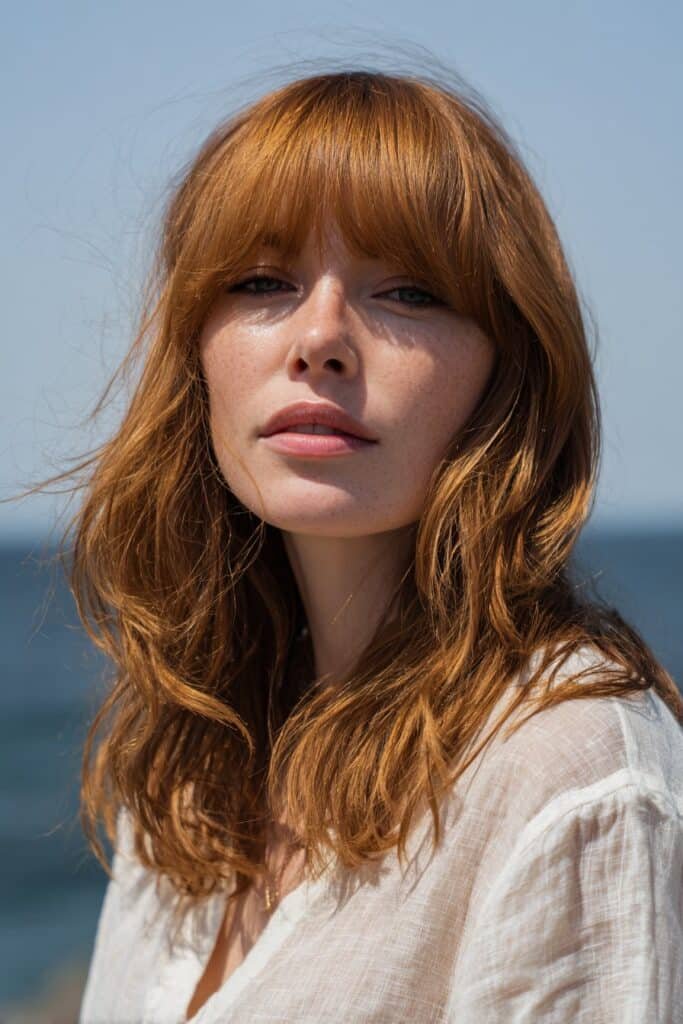
If I had to choose one style to wear every day for the rest of my career, it might just be this one. The beachy lob with curtain fringe is the perfect intersection of effort and ease.
What is it
The beachy lob captures the casual, sun-kissed aesthetic of naturally wave-dried hair at lob length — tousled, slightly undone, and absolutely gorgeous. Curtain fringe (similar to curtain bangs but with a slightly more feathered, longer quality) parts down the middle and sweeps to both sides of the face, framing it beautifully. Together, these elements create one of the most photogenic, universally flattering looks imaginable.
How it works best for all types of fine hair
Whether your fine hair is straight, wavy, or somewhere in between, the beachy lob adapts to it beautifully. If your hair is straight, a curling wand or braiding technique creates waves that look natural. If your hair already has some wave, embracing and enhancing it with the right product brings this style to life with almost zero effort. Curtain fringe is endlessly forgiving for fine hair — its open, separated quality never looks sparse.
How to make it work — tips
Braid slightly damp hair into two or three loose braids before bed and wake up to natural-looking waves with no heat required. On those braids, you can work in a tiny bit of sea salt spray before braiding for extra texture. Style curtain fringe by blow-drying with your fingers, allowing it to fall naturally into its part. Finish the entire look with a light-mist texturizing spray held about twelve inches away from your hair for that perfect beachy finish.
Soft French Lob with Feathery Fringe
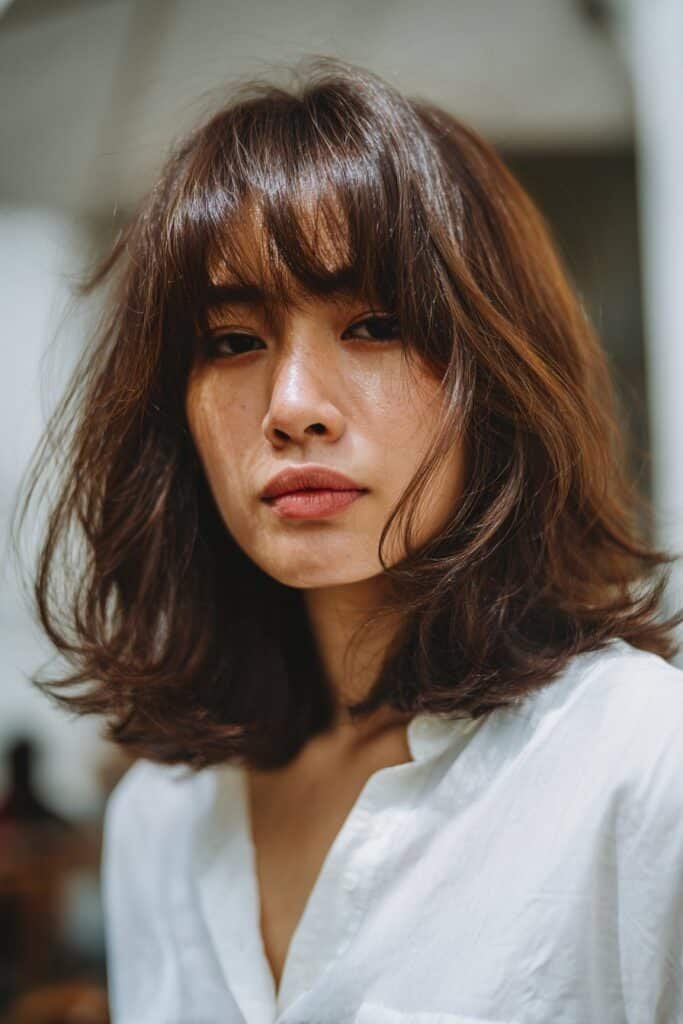
I saved this one for near the end because it is one of the most elegant, sophisticated styles in my entire repertoire, and it has a particular magic when worn with fine hair.
What is it
The soft French lob is inspired by the classic Parisian approach to hair — effortlessly beautiful, barely styled, and deeply chic. It sits at mid-neck to collarbone length with very minimal layering, preferring natural movement over structured cuts. Feathery fringe — long, light pieces with a razor-cut texture — sits across the forehead with the kind of softness that makes it look like the hair simply grew that way. This is minimalist beauty at its finest.
How it works best for fine hair with natural smoothness
Fine, smooth hair is actually the ideal foundation for the soft French lob because its natural sleekness creates exactly the kind of low-profile, understated elegance this style is built on. There’s no fighting against your hair’s texture here — you’re working entirely with it. The feathery fringe adds that single note of interest at the front without disrupting the otherwise serene quality of the look.
How to make it work — tips
The secret to the French lob is restraint — less product, less heat, less intervention. A single pass of a flat iron on low heat through the lengths for smoothness, then a few loose pieces styled with your fingers at the front. Feathery fringe is best maintained with the lightest possible touch — a quick comb and a gentle warm blast from your dryer is genuinely all it needs. Let your hair breathe, and trust the cut to do the work.
Conclusion
Fine hair and I have been in a long-term, deeply loving relationship for as long as I can remember. From my very early days learning the fundamentals of hairstyling all the way through to my most recent work with clients, fine hair has taught me more about creativity, precision, and the true meaning of working with what you have than any other hair type.
What I want you to take away from every single one of these sixteen styles is this: your fine hair is not a problem to be solved. It’s a characteristic to be embraced, celebrated, and dressed with intention. The lob is genuinely one of the kindest cuts for fine hair because it removes the dead weight of too-long lengths that drag fine hair down, and it positions your hair in a zone where it naturally appears most full and alive. Add bangs — in any of the sixteen forms we’ve explored today — and you have a built-in tool for creating fullness, framing your face beautifully, and expressing your unique personality through your hair.
I always say to my clients, and I’ll say it to you now: the best haircut is the one that makes you feel most like yourself when you catch your reflection unexpectedly. It’s that moment when you walk past a mirror and think, “oh yes — that’s me.” Whether you gravitate toward the bold choppiness of a razored lob with piece-y bangs, the dreamy romance of a wavy lob with wispy fringe, or the clean sophistication of a blunt lob with straight-across bangs, there is a version of this look that belongs entirely to you.
Trust your instincts, find a stylist who listens carefully to what you want, bring reference photos to your appointment, and invest in the right products for fine hair — a good volumizing shampoo, a lightweight styling spray, and a flexible-hold finishing product will take your lob further than any single technique. Fine hair styled with knowledge and confidence is some of the most beautiful hair I have ever seen. I genuinely mean that from the bottom of my heart.