
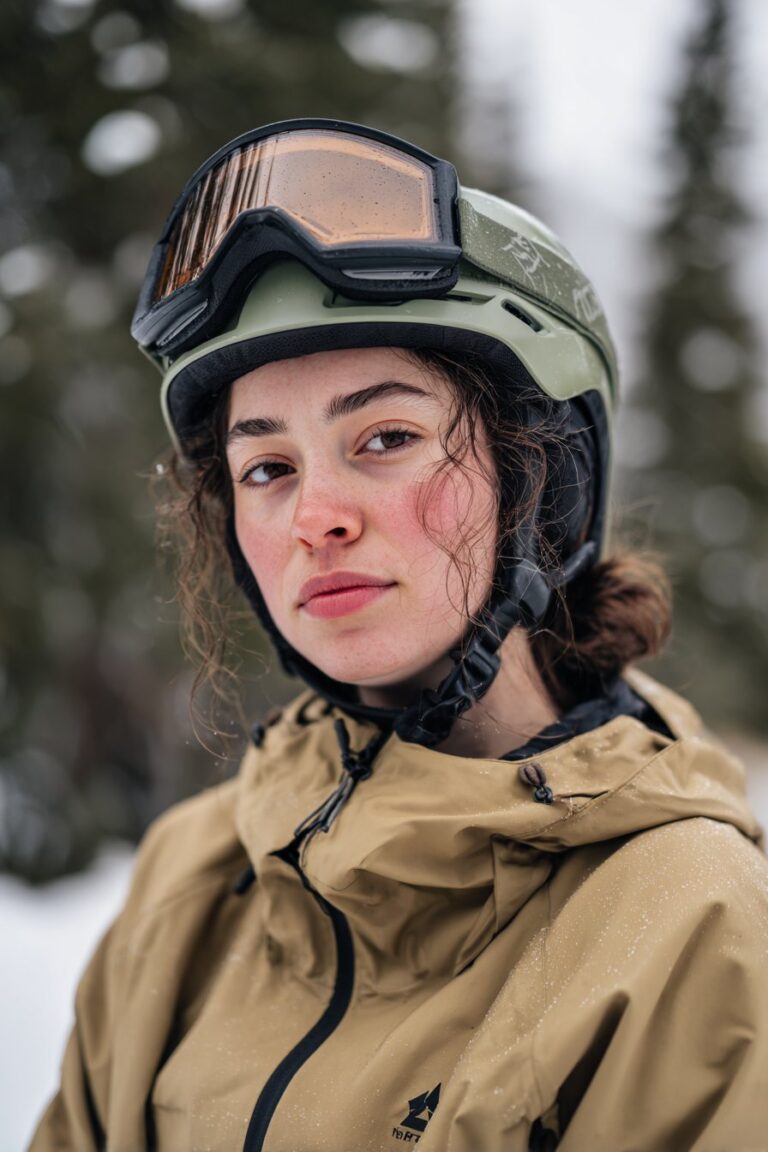
Ski hairstyles with helmet wear has been one of my biggest winter sports challenges. I’ve spent countless mornings battling the dreaded “helmet hair” before hitting the slopes, trying to find styles that look cute but also stay put.
When it comes to wintry weather, your hair shouldn’t be an afterthought. I’ve learned through many ski trips that the right hairstyle makes all the difference. From tight braids to soft buns and practical ponytails, these styles are designed to accommodate your hair type while keeping it in place throughout your ski adventure. Whether you’re looking for snowboarding hairstyles or cute skiing hairstyles, the key is finding options that can withstand both your helmet and the elements. I’ve personally tested these 14 helmet-friendly hairstyles that not only look great but also help minimize frizz and tangling. Trust me, choosing a style that keeps your hair securely in place will let you focus on carving those perfect turns instead of constantly adjusting your hair under your ski helmet.
Loose Braided Pigtails
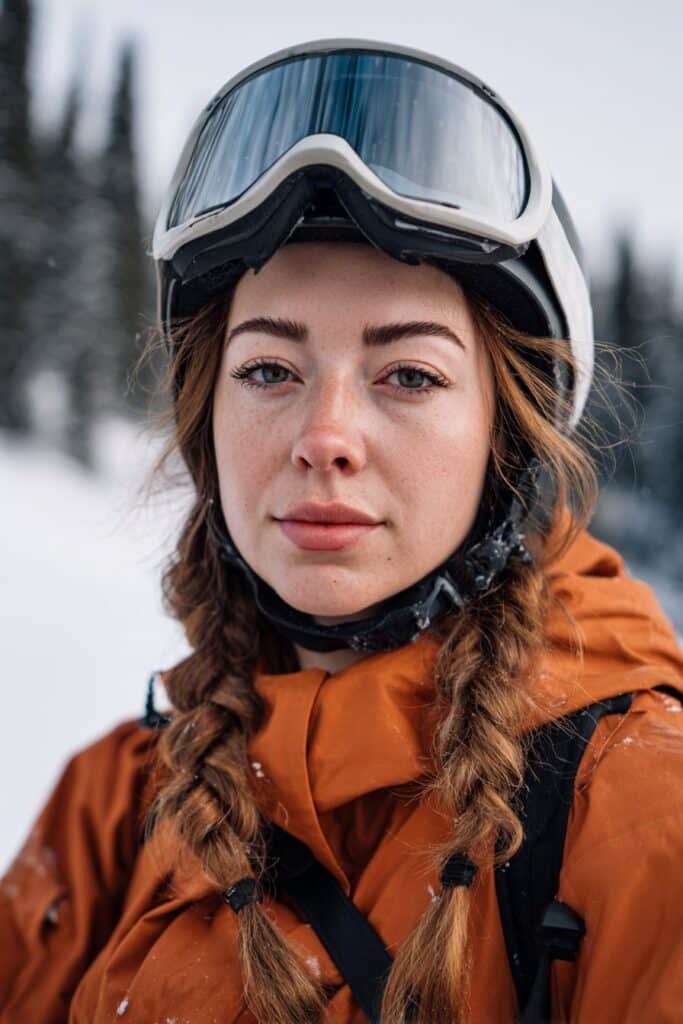
Loose braided pigtails have become my go-to style for conquering the slopes. These relaxed braids offer the perfect balance between practicality and style, keeping my hair manageable throughout an entire day of skiing.
Loose Braided Pigtails styling tips
Creating this look is surprisingly straightforward. First, I part my hair directly down the middle from front to back. Next, I gather each section into low pigtails positioned at the base of my neck. For the braiding itself, I’ve found that keeping them somewhat loose works best—too tight and they become uncomfortable under a helmet after several hours.
For added security, especially on intense ski days:
- Secure each braid with small, soft elastics that won’t dig into your scalp
- Gently pull on the braid sections after completing to create fullness
- Consider a light spritz of flexible-hold hairspray for extra staying power
“I love that I can adjust how tight or loose I want the braids depending on the day,” I often tell my skiing friends. For windier conditions, I braid them more securely; for casual days, I keep them looser for comfort.
Why Loose Braided Pigtails work under helmets
The genius of this style lies in its low profile. Since the braids sit at the nape of your neck, they fit comfortably under helmets without creating awkward pressure points. Furthermore, unlike single braids or high ponytails that can create bumps, these evenly distributed pigtails allow your helmet to sit properly.
Perhaps the biggest advantage I’ve discovered is how this style prevents tangling. After a full day of skiing through wind and snow, my hair remains remarkably knot-free. The braiding pattern holds hair securely yet gently, minimizing friction against jacket collars and helmet padding.
Additionally, this style transitions beautifully from slopes to après-ski. Once I remove my helmet, I simply loosen the braids slightly for natural, beachy waves—no bathroom styling session required!
Best hair types for Loose Braided Pigtails
Throughout my skiing seasons, I’ve noticed this style works particularly well for medium to long hair. The length provides enough material to create substantial braids that stay put.
For those with fine hair, I recommend adding a bit of texturizing spray before braiding. This creates grip that helps prevent slipping—a game-changer for maintaining your style through intense runs.
Those with thick hair will appreciate how this style distributes volume evenly, making helmet fit more comfortable. Meanwhile, friends with shoulder-length cuts tell me they find success with this style by keeping the braids shorter and securing any flyaways with bobby pins.
Even short bobs can adapt this look by creating mini braided pigtails—they might not hang down far, but they’ll still keep hair contained and helmet-friendly.
Sleek Low Bun

The sleek low bun offers elegant simplicity for my ski days. This classic style has saved me countless times on the slopes, providing both function and fashion with minimal effort. As someone who values both performance and style, I’ve refined this look to perfection over many ski seasons.
Sleek Low Bun styling tips
Creating this sleek style requires just a few simple steps:
First, I apply a lightweight styling cream or serum to smooth any flyaways before hitting the slopes. Next, I gather my hair into a low ponytail positioned right at the nape of my neck, securing it with a damage-free elastic. Then I twist the ponytail into a loose bun and secure it with bobby pins or a scrunchie.
For extra hold and polish:
- Use a touch more styling cream to tame any stubborn baby hairs
- Secure with crossed bobby pins for maximum stability
- Consider a donut hair accessory for a more structured look
“My favorite trick is starting with the low ponytail before putting on my helmet,” I often tell friends. This ensures the bun sits perfectly below the helmet edge without creating pressure points.
Why Sleek Low Bun is helmet-friendly
The genius of this style lies in its strategic positioning. Since the bun sits at the nape of my neck and below the bottom edge of my helmet, it never interferes with proper helmet fit or safety. Moreover, this placement prevents the uncomfortable “bumps” that higher styles often create.
This low-profile style keeps hair firmly contained throughout even my most adventurous runs. Consequently, I’m never distracted by stray hairs or uncomfortable pressure points while carving through fresh powder.
The sleek nature of this style also means my helmet slides on and off effortlessly—a small but significant benefit when transitioning between indoor and outdoor activities during a ski day.
Best occasions for Sleek Low Bun
This versatile style truly shines as a transition look. The slightly messy look works beautifully when I remove my helmet at the lodge, requiring minimal touch-ups before après-ski activities. In fact, the style often looks even better after wearing a helmet, gaining a casual softness.
For competitive or performance-focused ski days, this no-nonsense style keeps everything secure without distraction. Certainly, on windy days, I particularly appreciate how this bun prevents the tangling that looser styles might experience.
The sleek low bun also pairs perfectly with accessories like turban-style bandanas or cashmere headbands, making it ideal for those fashion-forward slope sessions where style matters as much as performance.
Double Dutch Braids
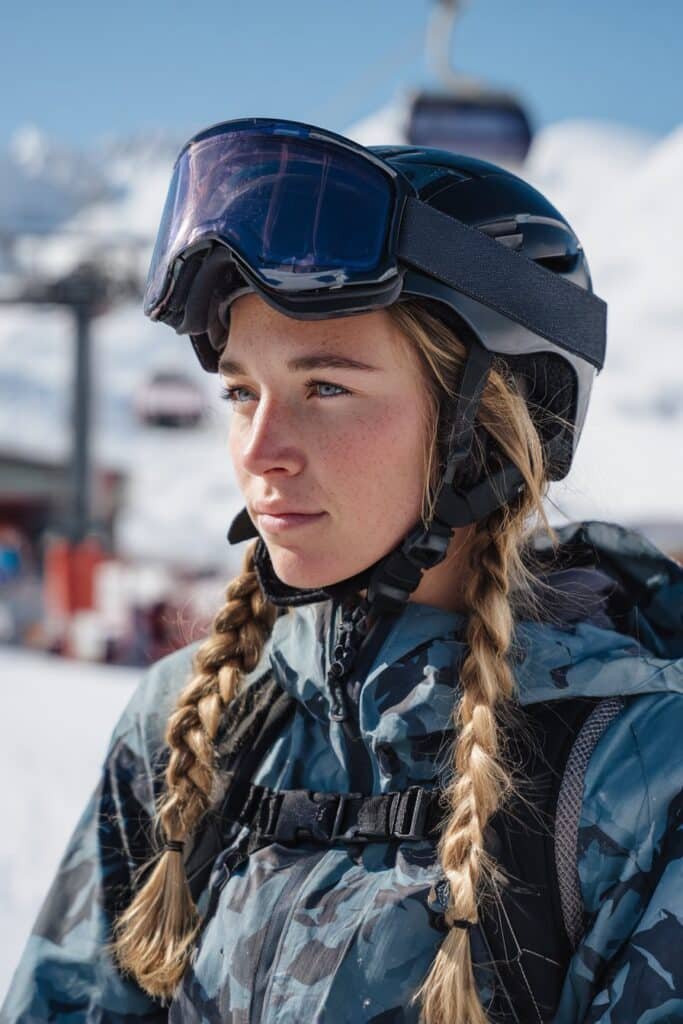
For those serious skiing adventures, I always trust in the reliability of Double Dutch braids. These inside-out braids have become legendary among skiers for their ability to stay put through jumps, falls, and hours of activity.
Double Dutch Braids styling tips
Creating this secure style requires some practice, yet the results are worth it. First, I part my hair directly down the middle from front to back. Subsequently, I divide each side into three equal sections. Unlike regular braids, the Dutch technique involves crossing strands under rather than over each other.
The key steps I follow:
- Begin with clean, detangled hair
- Add hair from the sides with each cross-under motion
- Maintain consistent tension throughout
- Secure ends with small, soft elastics
“One important trick I’ve learned is making a very precise center part,” I tell my ski companions. “If the division isn’t clean, the braids will look crooked and won’t sit properly under your helmet”.
Why Double Dutch Braids stay secure
The primary reason these braids excel for skiing is their flat profile against the head. Thankfully, this creates almost the same comfort as wearing loose hair while preventing those painful pressure points under a helmet.
Another significant advantage? These braids effectively prevent frizz and tangling. Indeed, after removing my helmet at the lodge, my hair remains surprisingly intact. Even through intense runs and windy conditions, the braids maintain their structure.
For those concerned about braids swinging around while looking behind you during downhill runs, you can tie or braid the ends together lower down your back. This modification creates an even more secure style without compromising comfort.
Best hair types for Double Dutch Braids
From my experience, this style works exceptionally well for thick hair. The substantial texture provides enough grip for braids to hold their shape throughout active days.
Medium to long hair lengths offer ideal canvas for Dutch braids, providing enough length to create secure plaits. Naturally, those with very long hair benefit most—I’ve seen friends with hair extending several feet still maintain perfect Dutch braids through full days of skiing.
For those with curly or textured hair, Double Dutch braids offer an added advantage as a protective style. They keep curls contained and prevent the dreaded post-helmet frizz that can otherwise ruin both your look and your mood on the slopes.
Short Side Braid
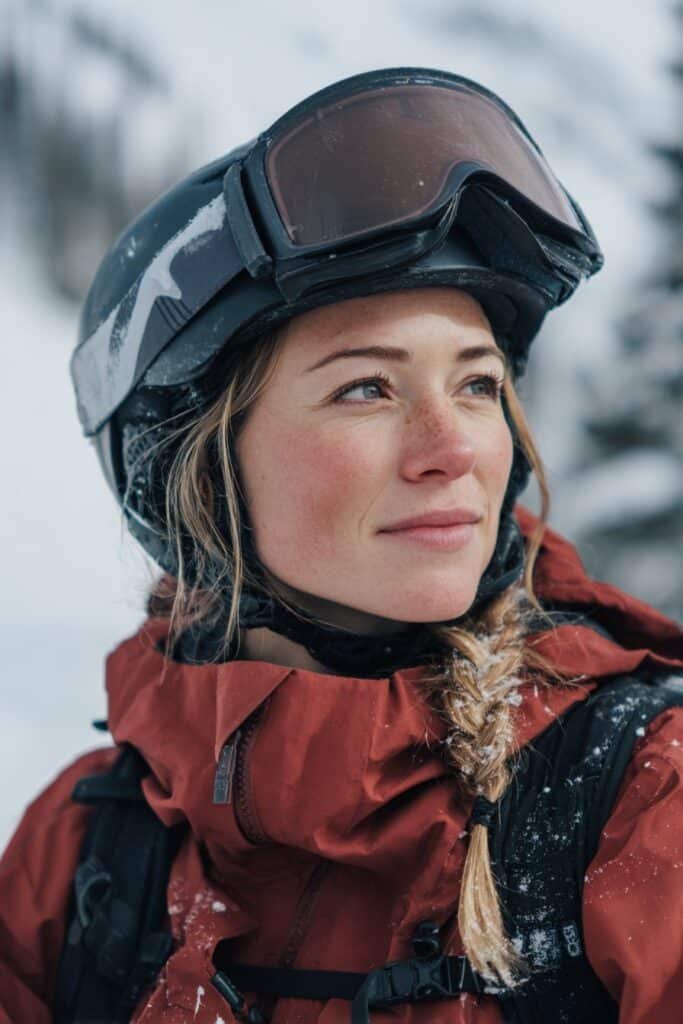
When simplicity meets style on the slopes, my trusty short side braid comes to the rescue! I’ve discovered this effortless option saves precious morning time while still keeping my hair protected throughout a full day of skiing.
Short Side Braid styling tips
Creating this hairstyle is refreshingly straightforward. First, I choose which side I want my braid to fall—usually opposite to my dominant turning direction for maximum comfort. Next, I gather all my hair to that side and divide it into three equal sections before braiding traditionally.
For lasting hold throughout the day:
- Apply a small amount of hairspray to keep flyaways at bay
- Secure with a clear elastic that won’t catch on helmet padding
- Keep the braid somewhat loose to prevent headaches after hours of wear
Whenever I’m running late for first tracks, this style becomes my savior. “It shows the same advantages as the french braid, but it is faster and easier,” as my ski instructor once pointed out.
Why Short Side Braid is practical
The beauty of this style lies in its versatility and functionality. Unlike more complicated braids, the side braid tucks neatly under a neck gaiter or scarf, protecting hair from harsh winds and friction.
Moreover, positioning the braid to one side distributes hair weight evenly, eliminating those uncomfortable helmet pressure points. Naturally, this becomes crucial during long days on challenging runs where the last thing you need is a distraction.
Many skiers, myself included, appreciate how this style transitions seamlessly from slopes to lodge. Upon removing my helmet, I simply loosen the braid slightly for an effortlessly chic après-ski look.
Best for medium-length hair
Throughout my skiing seasons, I’ve noticed this style works wonderfully for medium-length locks. With shorter hair, traditional pigtails might not stay secure, yet the concentrated side braid holds everything in place.
For those with layers or bangs that tend to escape containment, this style offers a perfect solution. You can either incorporate those pieces into the braid or leave them loose for a stylish framing effect—what some playfully call “slut bangs” when paired with a beanie.
Even friends with curly hair have adapted this style by creating a tighter braid and tucking the end under their neck warmer. Ultimately, the side braid’s adaptability makes it suitable for various hair textures and lengths, though medium-length hair provides the ideal balance of manageability and security.
Cornrow Braids
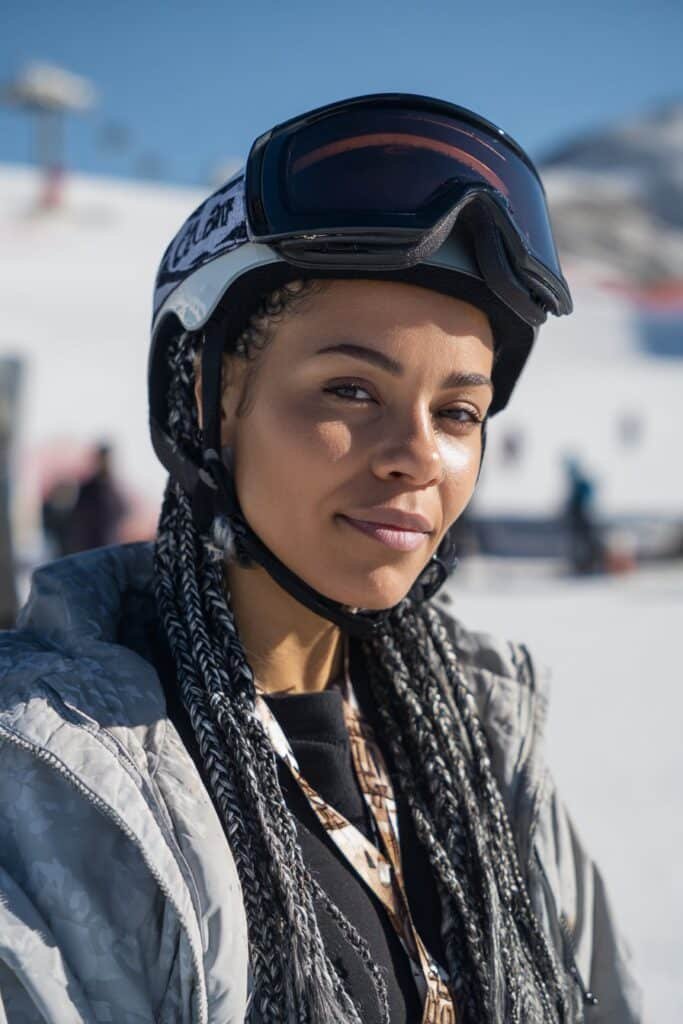
As someone with textured hair, I’ve found cornrow braids to be my ultimate savior on the slopes. This protective style has completely changed my skiing experience, eliminating the constant struggle between helmet fit and hair maintenance.
Cornrow Braids for textured hair
Cornrow braids offer an exceptional solution for those of us with curly or textured hair who want a no-fuss style for skiing. Throughout my winter adventures, I’ve discovered that these close-to-the-scalp braids keep everything neat and contained, regardless of how vigorous my runs get.
For those with thinner textured hair, your stylist can add extensions to create fuller cornrows. I’ve tried this technique myself and found it adds both volume and staying power throughout multiple ski days.
My favorite variations include:
- Straight-back cornrows for maximum helmet compatibility
- Stitch braids for a more decorative approach
- Low cornrow bun styles that sit perfectly at the nape
Firstly, I always make sure my cornrows lie flat against my head. Then, I typically wear a silk scarf between my braids and helmet – this extra layer keeps them neat while preventing friction that could damage both the style and my hair.
Why Cornrow Braids are protective
The protective nature of cornrows extends beyond just keeping hair out of your face. In addition, they shield natural hair from harsh winter conditions – something I genuinely appreciate during long days on freezing slopes.
Naturally, the tight, secure pattern prevents tangling and breakage that often occurs with looser styles. Above all, I’ve noticed how cornrows minimize exposure to cold, dry air that typically leaves my curls parched and brittle.
The durability factor cannot be overstated. Simply put, a well-done set of cornrows can last through an entire ski vacation, often requiring minimal touch-ups. This means more time actually enjoying the slopes rather than fussing with my hair each morning.
Cornrow Braids and helmet comfort
The most compelling advantage of cornrows for skiing is how they create virtually no interference with helmet fit. Unlike voluminous styles that can push helmets up awkwardly, cornrows allow helmets to sit properly on your head.
Finally, the compact nature of cornrows eliminates pressure points that often cause headaches with other styles. Even though I spend hours skiing, I never experience that uncomfortable helmet pressure that used to plague me with other hairstyles.
For maximum comfort, I distribute my braids evenly rather than gathering them with a hair tie. This spreads them out so they don’t create bulky spots under my helmet. Ultimately, this approach ensures both safety and comfort without compromising style.
Low Ponytail
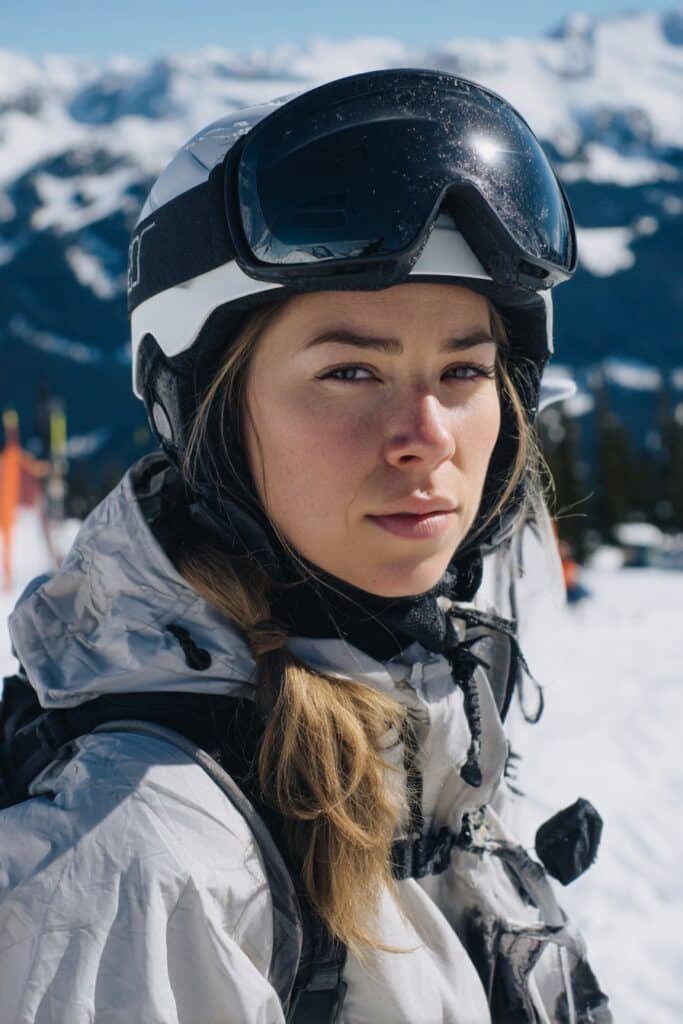
The humble low ponytail may seem basic, yet it remains my most reliable ski hairstyle solution. This minimalist style has saved me countless mornings when I’m rushing to catch first chair.
Low Ponytail styling tips
Creating this look couldn’t be simpler. I gather all my hair and secure it with a strong elastic at the nape of my neck—precisely where the bottom of my helmet sits. For maximum hold throughout a full day on the slopes, I recommend:
- Using a lightweight styling cream or serum first to smooth any flyaways
- Securing with damage-free elastics like Invisibobbles that won’t leave kinks
- For longer hair, consider tucking ends into your jacket or neck buff for extra protection
To elevate this simple style, I sometimes create a hidden-elastic effect. After securing the ponytail, I open a space above the elastic with my fingers and pull the tail through, creating a V-shaped effect that looks more polished.
Why Low Ponytail is a go-to
The low ponytail earned its status as a skiing essential because it sits perfectly at the base of your neck without interfering with helmet fit. Therefore, you can enjoy all-day comfort without constant adjustments.
Unlike higher positions that create uncomfortable bumps, this placement allows your helmet to sit properly. Furthermore, on clear blue days, this style keeps hair contained without overheating, although I typically avoid it during heavy snowfall as wet, frozen hair isn’t exactly pleasant!
In essence, this style offers what every skier needs—a quick, no-fuss option that works with any helmet or winter beanie.
Low Ponytail for all hair types
What makes this style truly universal is how it adapts to different hair types and lengths. Generally, shoulder-length to long hair works perfectly, although shorter cuts can still manage this style.
For those with fine, slippery hair that tends to escape, try a light texturizing spray beforehand. However, if you have extra-long hair or extensions, consider converting your ponytail into a low bun to keep strands together and prevent tangling.
For added protection against harsh winter conditions, I sometimes braid or twist the length of my ponytail after securing it—this keeps everything consolidated during intense runs.
Twisted Low Braided Ponytail
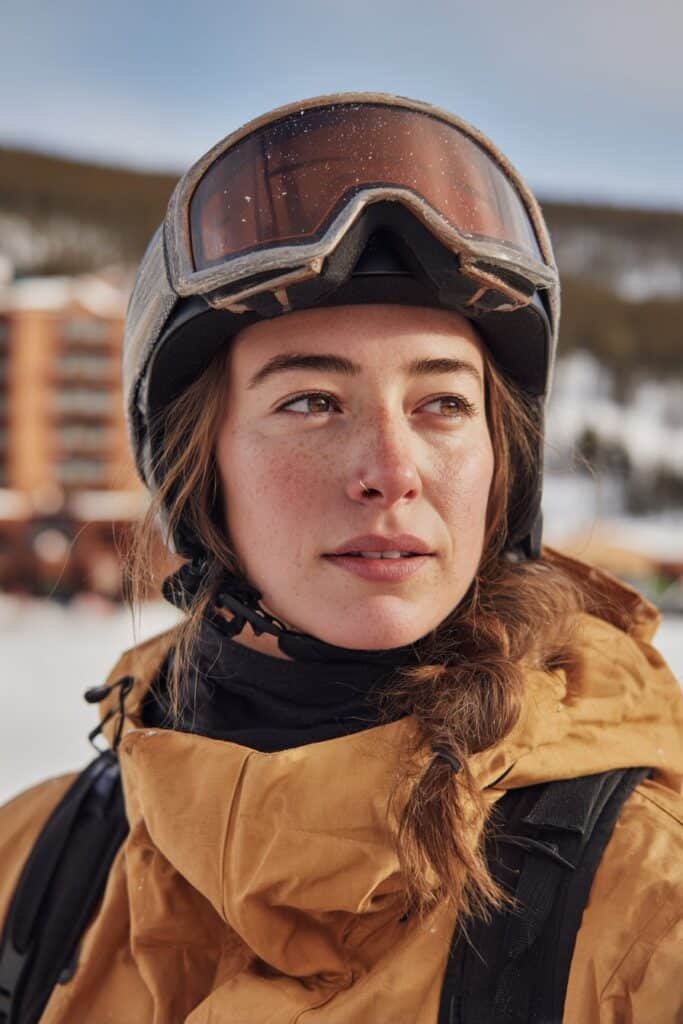
The twisted low ponytail elevates basic ski hair into something special yet practical. I discovered this style after years of struggling with hair that would become a tangled mess by day’s end.
Twisted Low Ponytail styling tips
Creating this look requires minimal effort yet yields maximum results. To begin, I smooth flyaways with a lightweight styling cream. Next, I secure my hair at the nape of my neck using a no-damage hair tie. The magic happens in the twisting – either by separating hair into two sections and crossing them repeatedly or by twisting the entire ponytail around itself. For extra flair:
- Start with a clean part of your choice
- Take two small sections from each side of your head
- Cross the front piece over the back piece, continuing this pattern around your head
- Secure the twists into a low ponytail at the back
Why Twisted Low Ponytail adds elegance
In terms of esthetics, this style offers sophistication without sacrificing function. Unlike ordinary ponytails that can look plain, the twisted element adds visual interest that transitions beautifully from slopes to après-ski. Primarily, I appreciate how this style keeps hair secure yet doesn’t create uncomfortable pressure points under my helmet.
The twisting technique minimizes tangling as well as prevents that dreaded “helmet hair” look once you’re ready for post-ski activities. Ultimately, it’s a quick style that feels comfortable all day.
Best for long hair
This hairstyle works wonderfully for longer locks as the twisting action helps control length and volume. Specifically, shoulder-length to long hair provides enough material to create substantial, secure twists that stay put throughout active skiing sessions. For those with shorter bobs, a modified version can work too – just focus the twist closer to the nape.
Messy Fishtail Braid
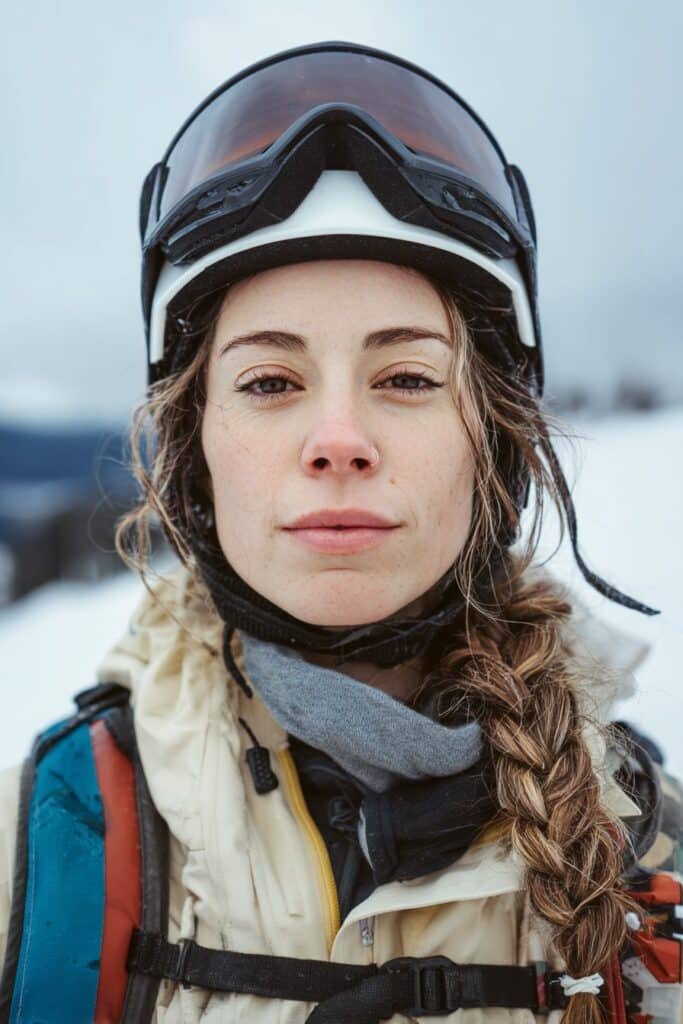
The messy fishtail braid combines bohemian charm with practical functionality for ski days. I discovered this style after struggling with complicated braiding techniques that would fall apart halfway down the mountain.
Messy Fishtail Braid styling tips
Creating this look is much simpler than a traditional fishtail. First, I gather my hair into a side or center position. Afterward, I use a faux fishtail technique that mimics the intricate pattern without the frustrating finger work. For beginners:
- Secure your hair with an elastic at the desired position
- Create a pull-through braid pattern that resembles a fishtail
- Once complete, gently pull the outer edges to create thickness
One trick I love is intentionally making it messy—this actually helps it stay put under a helmet and gives that effortlessly chic look once you’re done skiing.
Why Messy Fishtail Braid is stylish
What makes this style perfect for skiing is how it looks even better as the day progresses. Accordingly, that slightly disheveled appearance creates a carefree yet put-together vibe ideal for winter sports.
Unlike perfect braids that can look stringy after hours under a helmet, the messy fishtail gives you a thick, full braided look that transitions beautifully from slopes to après-ski gatherings.
Best for casual ski days
Evidently, this style shines on relaxed ski days when you want to look stylish without spending ages on your hair. I prefer it for weekend trips or warmer days when I might remove my helmet occasionally.
This hairstyle works beautifully with winter accessories like beanies too—making it versatile for all your snow adventures.
Sporty Headband Look
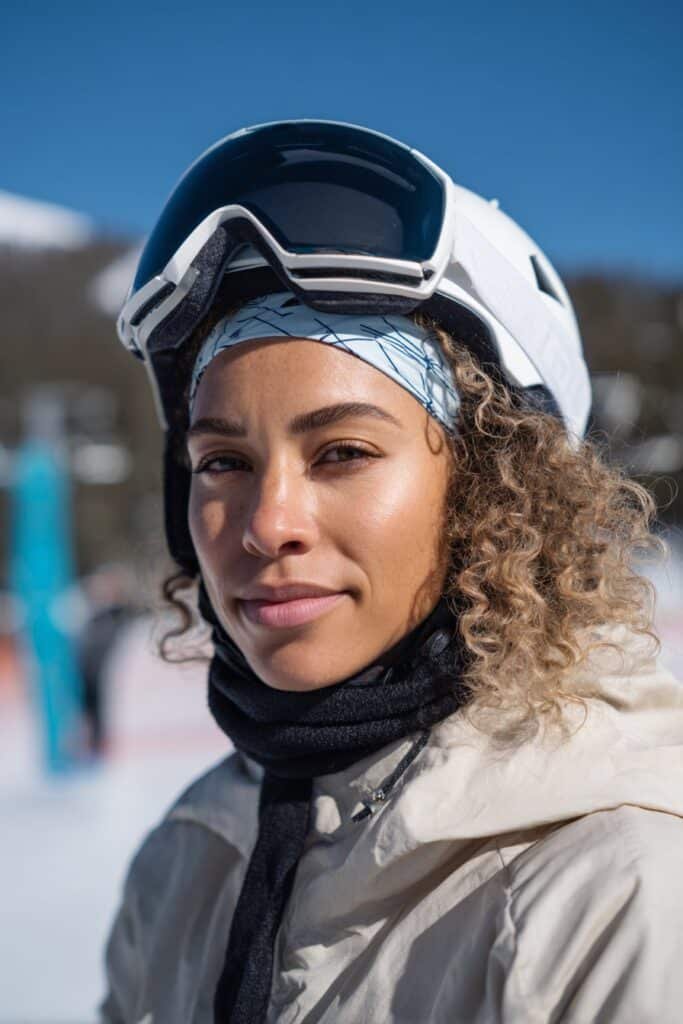
Headbands have saved my ski days countless times, offering a practical solution for those of us struggling with helmet-hair chaos. This versatile accessory keeps shorter strands contained without the bulk of other styles.
Sporty Headband Look styling tips
Finding the perfect headband for skiing requires some know-how. I’ve discovered jersey headbands work exceptionally well – they’re thin enough to fit comfortably under helmets yet provide sufficient grip to keep hair back. For installation:
- Position the headband before putting on your helmet
- Ensure it covers your ears for added warmth
- Choose darker colors to hide inevitable sweat marks
Initially, I found that black jersey headbands became my absolute go-to during skiing trips. They effectively keep shorter pieces of hair out of the way without creating uncomfortable pressure points under my helmet.
Why Sporty Headband Look is functional
The functionality of headbands extends beyond just controlling flyaways. Undeniably, they provide essential warmth and comfort in cold conditions. Plus, for those with bangs or face-framing layers that escape from ponytails, a headband keeps everything neatly contained.
Essentially, these headbands create a barrier between your skin and the helmet lining, preventing direct contact that can cause irritation throughout long days on the slopes.
Best for short to medium hair
Throughout my years of skiing, I’ve noticed headbands work magnificently for bob-style haircuts and shorter lengths that can’t be gathered into traditional ponytails or braids. Comparatively, this style offers freedom without the commitment of more intricate hairstyles.
After skiing, I sometimes secure my hair into a low ponytail and keep the headband on for a stylish après-ski look. For shorter hair especially, this creates an effortlessly put-together appearance despite hours under a helmet.
Tucked-In Hair
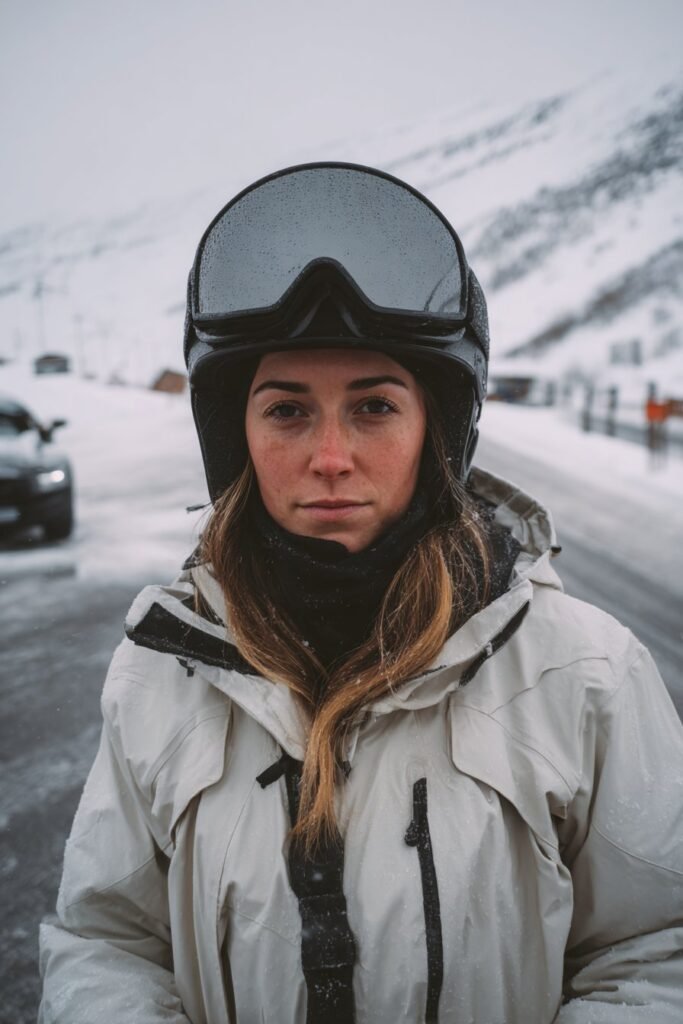
For days when I simply want to ski without hair worries, tucked-in hair has become my ultimate minimalist solution. This straightforward approach eliminates styling time yet still offers superior protection for your locks.
Tucked-In Hair technique
The beauty of this method lies in its simplicity. I simply gather my hair neatly, then tuck it completely into my jacket collar or neck buff. For extra protection, sometimes I’ll first wrap hair in a thin balaclava or cap—this additional layer keeps everything secure plus maintains a cleaner helmet interior. This works wonderfully with medium to long hair, yet requires absolutely no styling products or tools.
Why Tucked-In Hair prevents tangles
Of all techniques I’ve tried, tucking hair away completely provides the most effective protection against those notorious wind tangles. By keeping strands fully contained within your jacket, you create a protective barrier against harsh elements. After a full day on challenging runs, I’m always grateful to avoid that painful detangling session that typically follows when hair “gets out” and flaps freely.
Best for performance-focused skiers
This approach perfectly suits those of us who prioritize function over fashion on the slopes. Throughout frigid conditions, tucking hair reduces exposure to damaging elements. Its versatility makes it ideal for all hair types—I’ve seen friends with everything from waist-length locks to shoulder-length cuts use this technique successfully.
Double French Braids
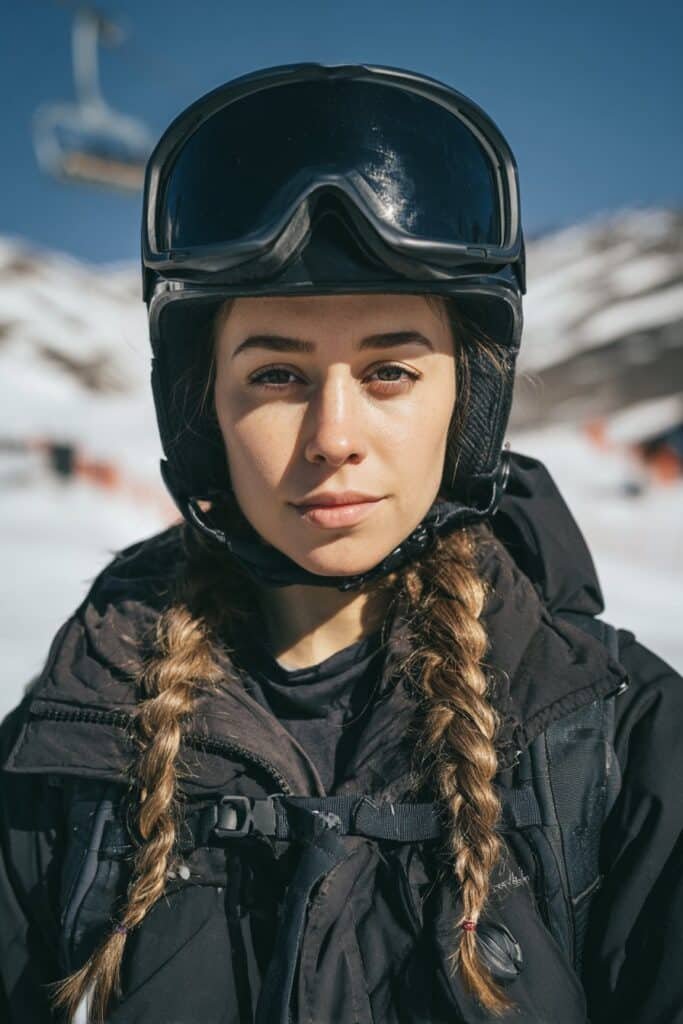
Double French braids have earned their status as a skiing classic for good reasons. As a time-tested option for my snow adventures, this style offers protection while keeping my look polished from first run to après-ski.
Double French Braids styling tips
Creating this look requires some practice yet yields incredible results. First, I part my hair down the middle into two even sections. Next, I create a French braid on each side, starting at my crown and working down to the ends. For lasting hold:
- Secure each braid with small elastics that won’t dig into your scalp
- Tuck ends into your jacket or scarf to prevent wind damage
- Keep braids relatively flat against your head for helmet comfort
Why Double French Braids are secure
These braids excel because they distribute hair evenly across your head, significantly reducing tangling and friction throughout active ski days. Hence, they create a flat profile that provides almost the same comfort as wearing loose hair under a helmet. In my experience, they transition perfectly between intense skiing and relaxing lodge time.
Best for thick hair
Throughout my skiing seasons, I’ve noticed this style works exceptionally well for those of us blessed with thicker locks. The technique distributes volume evenly, preventing uncomfortable pressure points. Besides, French braids keep hair secure all day, working beautifully even with layered cuts.
Half-up Braid with Bangs
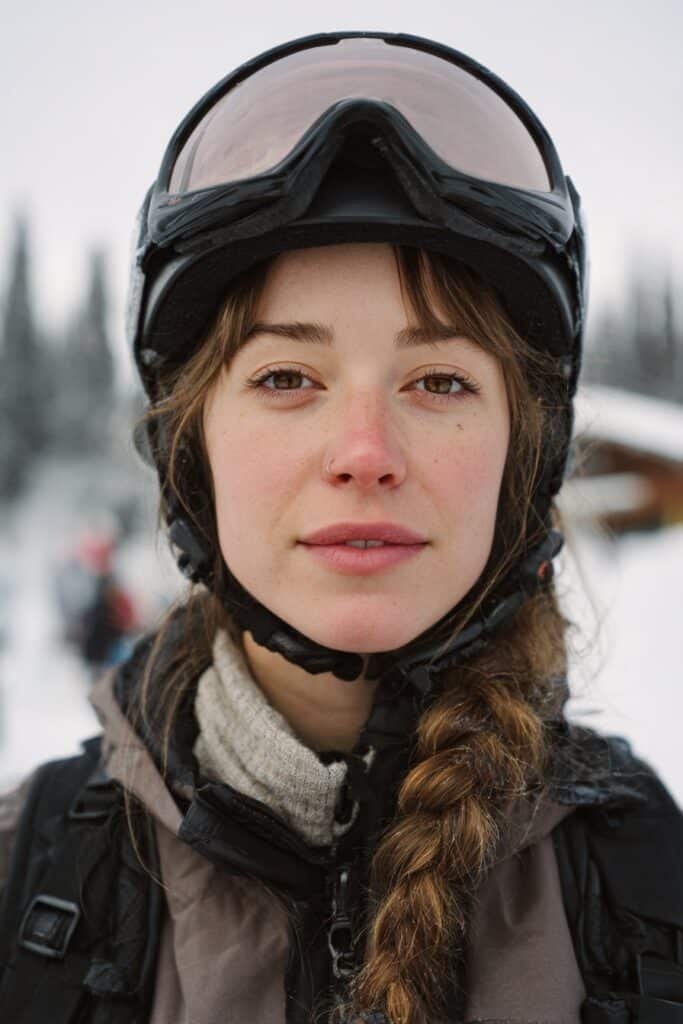
The half-up braided crown with bangs has been my fashion-forward solution for ski days when I want to look stylish without sacrificing function. This elegant yet practical style keeps my short hair contained while letting me maintain that personal touch.
Half-up Braid with Bangs styling tips
Creating this look is straightforward yet effective. To begin, I section off the upper half of my hair, leaving my bangs free to frame my face. Next, I create a small crown braid with just the top portion. The key is keeping the braid secure enough to stay put under pressure without pulling too tightly against your scalp.
Why Half-up Braid with Bangs is chic
The true beauty of this style lies in its delicate balance between fashion and function. Unlike fully braided styles, this half-up approach offers just enough flair to keep things interesting while maintaining practicality. The braid secures hair in place under the helmet, effectively preventing those annoying flyaways, whereas the bangs frame my face for an added touch of chicness.
Best for short hair
Throughout my skiing adventures, I’ve found this style perfectly suited for shorter cuts where full braiding isn’t possible. For bobs or shoulder-length hair, this partial braiding technique gives just enough control without requiring lengthy styling time. Plus, the face-framing elements transition beautifully from slopes to après-ski gatherings.
Textured Side Ponytail
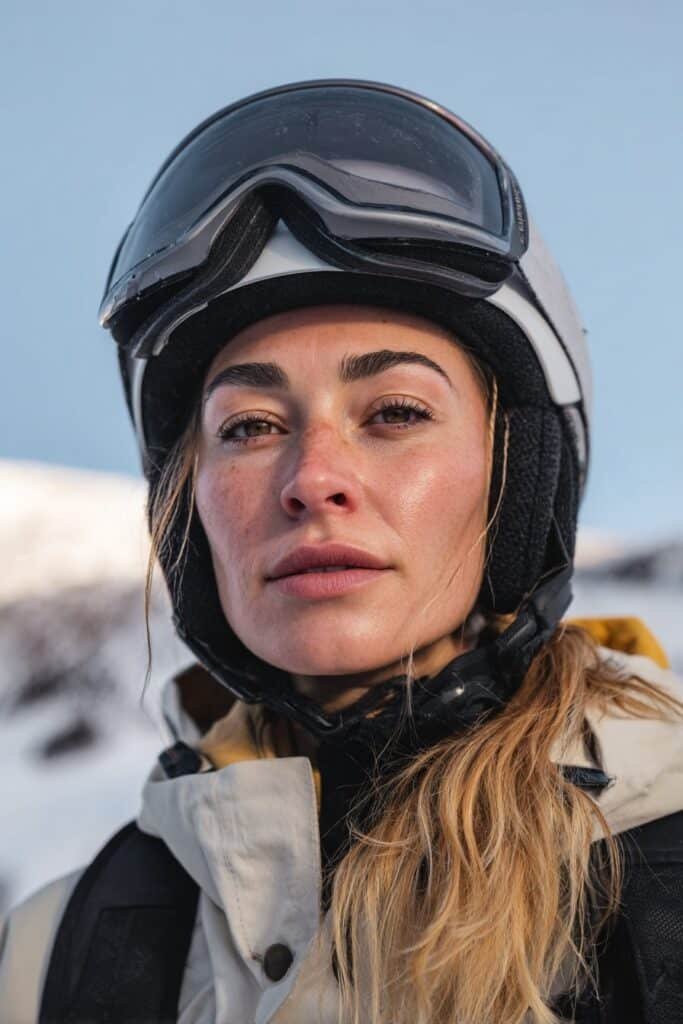
Voluminous ponytails have become my secret weapon against flat, boring ski helmet hair. Unlike regular ponytails, this textured version maintains lift and body even after hours under headgear.
Textured Ponytail styling tips
Creating this style involves a few key steps. Primarily, I start with dry hair and apply a volumizing product like Living Proof Full Dry Volume Blast for texture and grip. Next, I section out small pieces around my face to curl, adding dimension that frames my features nicely. For maximum volume:
- Gently tease the underside of your ponytail using a teasing brush
- Secure with damage-free elastics that won’t cause headaches
- Consider creating two ponytails and combining them for extra support and fullness
Uniquely, this style doesn’t require perfect execution—slightly messy actually works better for holding texture throughout the day.
Why Textured Ponytail adds volume
The beauty of this ponytail lies in its ability to maintain body despite helmet compression. Notably, the teased sections create cushioning that prevents that dreaded flat look after removing your helmet. Plus, the texturized finish makes post-ski styling effortless—just finger-comb and you’re ready for après activities.
Best for long hair
This hairstyle truly shines with longer locks that provide enough length for substantial texturizing. Alternatively, those with medium-length hair can achieve similar results by focusing texture at the crown. The volume-focused approach keeps hair secure yet comfortable—perfect for maintaining your style from first run to last.
Messy Low Bun for Curly Hair
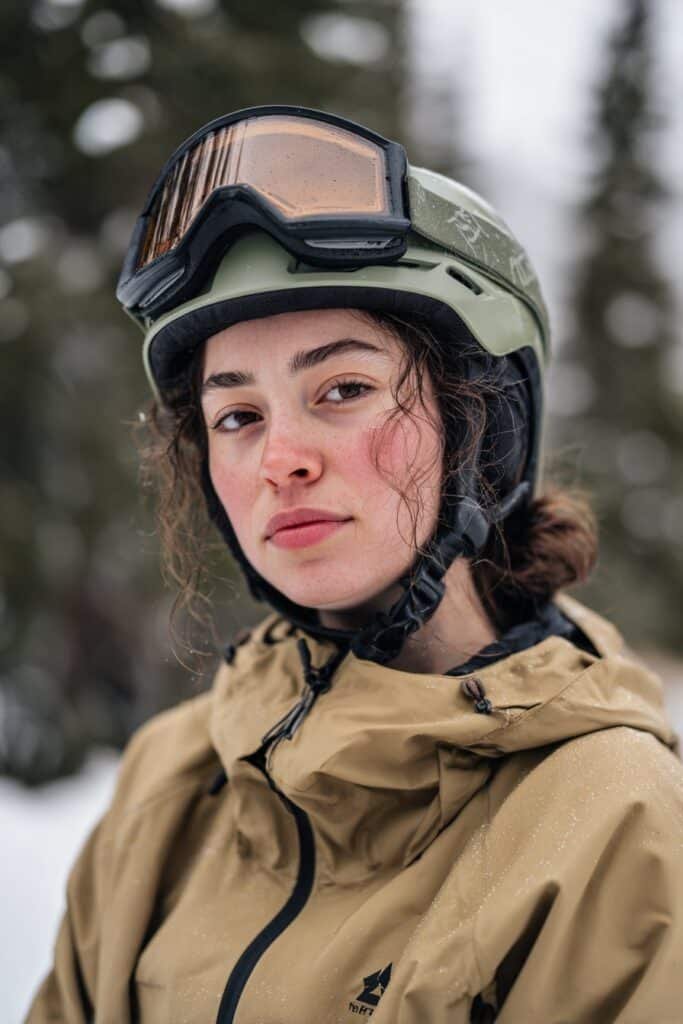
Curly-haired skiers face unique challenges on the slopes! My messy low bun has become a lifesaver for protecting my natural curls from helmet friction that once left my hair dried out and tangled beyond repair.
Messy Low Bun styling tips
Creating this style takes just a few minutes—perfect for those early morning lift lines. I begin by applying a leave-in conditioner to seal in moisture. Thereafter, I gather my curls at the nape of my neck and loosely twist them into a bun that sits comfortably below my helmet’s edge. For added security without tension:
- Use soft, damage-free elastics that won’t catch on curls
- Pin with bobby pins in a criss-cross pattern
- Keep the bun intentionally loose to prevent curl pattern disruption
Why Messy Low Bun suits curls
Given that cold air plus helmet friction equals disaster for curly locks, this style offers crucial protection. Plus, the intentional “messiness” works with your natural texture versus against it. As opposed to sleeker styles that fight your curl pattern, this approach embraces your hair’s natural volume.
Best for medium to long curly hair
Ideally, this style works for shoulder-length to longer curls with enough length to gather into a substantial bun. Simultaneously, it accommodates various curl patterns from loose waves to tight coils.
Conclusion
Finding the perfect ski hairstyle makes a world of difference during your winter adventures. After trying countless styles over my years on the slopes, I’ve learned that the right hairstyle truly enhances my skiing experience. Certainly, helmet-friendly hairstyles like Dutch braids and low buns prevent those annoying mid-run adjustments, allowing me to focus on carving through fresh powder instead of fixing my hair.
Throughout my skiing journey, I’ve discovered that practicality doesn’t mean sacrificing style. Whether you prefer the sleek simplicity of a low ponytail or the protective benefits of cornrow braids, you’ll find options that transition beautifully from exhilarating runs to cozy lodge gatherings. Additionally, considering your hair type and length helps narrow down which styles will work best for your specific needs.
Although some styles require more practice than others, the extra effort pays off when you’re comfortably skiing all day without hair distractions. Undoubtedly, tucked-in styles offer maximum protection against harsh elements, while braided options provide that perfect balance of security and style.
Remember that staying comfortable while skiing means addressing every detail – your hairstyle included. Therefore, take a few extra minutes before hitting the slopes to secure your locks properly. This small step ultimately transforms your ski day from good to great. My personal favorite remains the double Dutch braids, though I’ve grown to appreciate the simplicity of a textured low ponytail on those early-morning powder days.
Whichever style you choose, the goal remains the same – keeping your hair secure, preventing tangles, and maintaining comfort throughout your ski adventure. After all, when your hair stays put, you can focus on what really matters – enjoying every thrilling moment on the mountain.